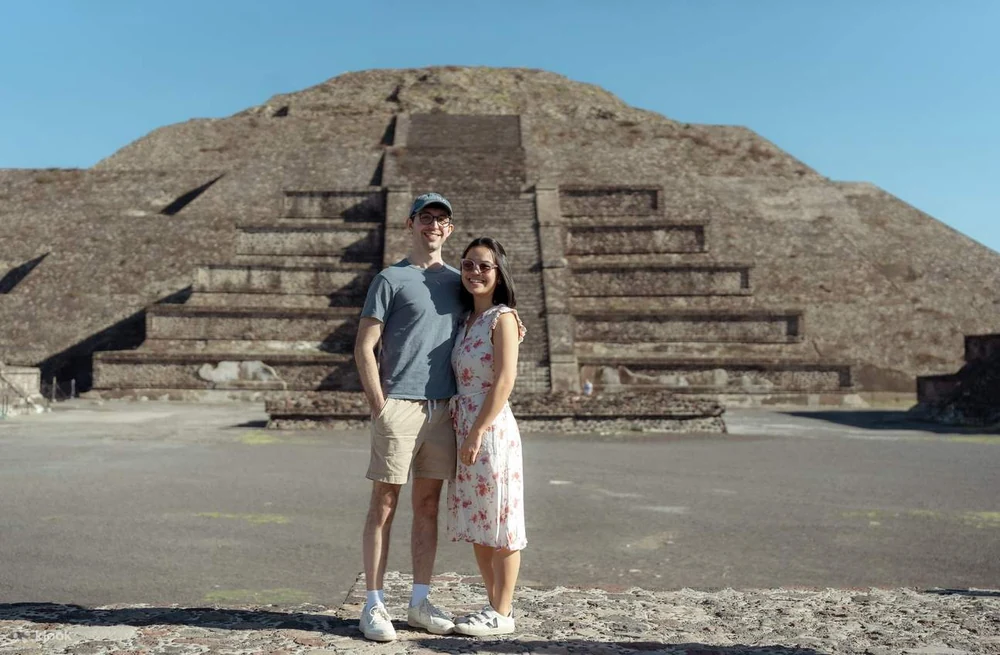
Teotihuacan Pyramids ToursAn Independent Guide
Check Availability

Teotihuacan Pyramids Tours from Mexico City
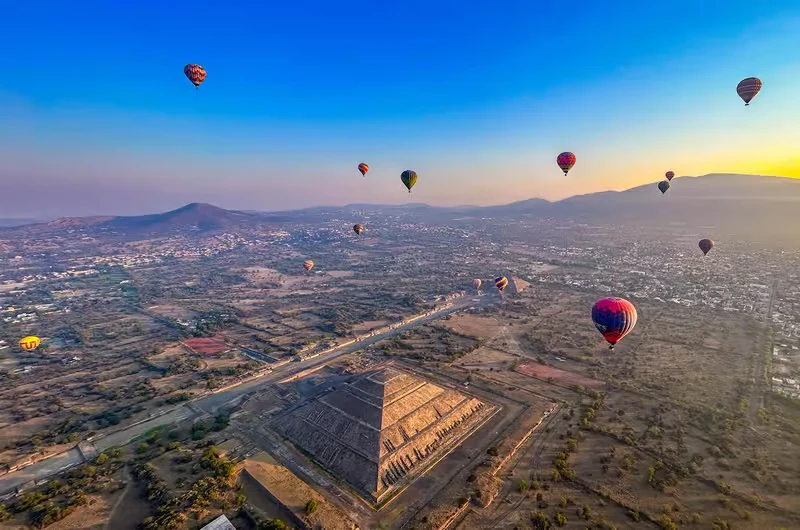
Walk the Avenue of the Dead as the gates open, float over the pyramids at sunrise or stand inside the Feathered Serpent temple with a certified guide. These Teotihuacan pyramids tours from Mexico City are matched to the traveller they suit, from the earliest gate to the quietest small group.

  • Rated 4.3 to 5.0 on GetYourGuide and Viator
  • Free cancellation up to 24 hours on every listing
  • $31 to $166 per person
Quick answer Best tours for the dry season and the equinox

Teotihuacan pyramids tours sell best from December to March, the dry high season: clear skies, dawns near 6°C and the calmest air for the sunrise balloon flights. The early-access departures reach the gate at 8:00 AM, before the coaches that pull in between 10 AM and noon, and that gap matters most on the busiest dates, Christmas week and the spring equinox weekend of 20 and 21 March 2027.

Key takeaways

  • Cheapest guided option is $31 at Gate 1 with the entry ticket included, but no transport, so you reach the site yourself
  • Entry is 210 MXN (about $11) for foreign visitors and it is included on every guided tour here. Fees and hours
  • The equinox weekend drew 38,103 visitors in 2026 and the Pyramid of the Sun stayed closed to climbing. What to expect in 2027
  • Most-reviewed by a distance: 7,632 reviews at 4.9, $39.20, back in the city by early afternoon
  • Sunrise balloon flights run from $166 with a pickup around 4:20 AM and 45 to 50 minutes in the air. Winter flying

Teotihuacan Pyramids Tours Compared

Every tour below includes the archaeological-zone entry ticket and a guide. Sunrise balloons and early-access departures come first because they are the ones that beat the December to March crowds. Booking, payment and cancellation are handled by GetYourGuide or Viator on their own sites, and prices, ratings and review counts move without notice.

Teotihuacan Sunrise Hot Air Balloon Flight

★★★★★ ★★★★★ 4.6(1,090 reviews)· 3–11 hours depending on option

From the air you see what ground touring can't show — the full scale of the Avenue of the Dead and the grid precision of the city, with pilots making several passes over the main structures. All three booking options include the post-landing sparkling wine toast and a flight certificate, and the full-day version adds the archaeological site and the Basilica of Guadalupe. Breakfast and lunch are at your own cost, and closed flat shoes are mandatory — no sandals, backpacks, or selfie sticks in the basket. Be warned: the transport option means a genuinely early pickup around 4:20 AM, and reviewers note the 11-hour full day is intense.

Cancellation
Free cancellation, full refund
Operator
None stated

Teotihuacan Early Access Small-Group Tour

★★★★★ ★★★★★ 4.6(1,859 reviews)· 8 hours

The early-departure option: 6:20 AM start puts you on site at 8–9 AM, when the Avenue of the Dead is quiet, the light is at its best, and the Pyramid of the Sun has no queue — most tour buses arrive between 10 AM and noon. Capped at 15 travelers with fast-track entry and a fully bilingual guide. One honest caveat from reviews: the 'box lunch' add-on is a lunch for the bus ride, not a ticket to the restaurant buffet, which you pay for separately.

Cancellation
Free cancellation, full refund
Operator
Amigo Tours

Teotihuacan Half-Day Tour — First at the Pyramids

★★★★★ ★★★★★ 4.9(801 reviews)· 5–6 hours

The efficiency pick: first morning visitors at the site, a focused 2h40m guided circuit that deliberately starts at the Temple of Quetzalcoatl before crowds arrive, and a 1:00–1:30 PM return that leaves your afternoon free. Coffee stop en route is the only food opportunity before the pyramids — there are no food stops at the site, so bring water and sunscreen. One caveat from reviews: the Starbucks Reforma pickup intersection has three Starbucks locations — use the exact address (Av. Reforma 80) from your confirmation.

Cancellation
Free cancellation, full refund
Operator
None stated

Teotihuacan All-Inclusive Tour with XIBALBA Cave Breakfast

★★★★★ ★★★★★ 5.0(685 reviews)· 6 hours 45 minutes

The only tour in this comparison with a perfect 5.0/5 (685 reviews), largely credited to guide Ernesto, a University of Mexico history professor leading groups capped at 13. Breakfast of enchiladas, juice, coffee, and fruit is served inside the XIBALBA volcanic cave, and the itinerary includes the Temple of Quetzalcoatl, which many tours skip. Entry ticket, bottled water, and an umbrella are included, with drop-off at Centro Histórico. One caveat: a March 2026 reviewer reports the day ran 1.5 hours longer than scheduled, so build buffer into afternoon plans.

Cancellation
Free cancellation, full refund
Operator
Yolotli Adventures

Paseos Olmedo Morning Teotihuacan Tour

★★★★★ ★★★★★ 4.9(7,632 reviews)· 5.5 hours

The most-reviewed Teotihuacan tour on Viator — 7,632 reviews at 4.9/5 with a Badge of Excellence, currently discounted from $49 to $39.20. The bus of up to 50 splits into groups of 9–12 per guide on arrival, so it works like a small-group tour at the site, and you're back in CDMX by early afternoon. One caveat from reviews: return drop-off is sometimes at a different point than pickup due to traffic — confirm your drop-off location with the operator.

Cancellation
Free cancellation, full refund
Operator
Paseos Olmedo

Teotihuacan No-Commercial-Stops Tour with Certified Guides

★★★★★ ★★★★★ 4.9(657 reviews)· 6 hours

For history-first travelers: Experiencias Mexicanas strips out every commission-earning stop that standard group tours include, spending the time at the pyramids instead — about 3 hours on site plus a Pemex restroom stop en route. All guides are certified in archaeology and history, and the tour ran even for a single booked participant. One honest caveat from a review: water is not provided and sunscreen isn't flagged in advance — bring both, or you'll buy them at inflated prices at the site.

Cancellation
Free cancellation, full refund
Operator
Experiencias Mexicanas

Private Teotihuacan Tour with Historian Hector (5 Hours, SUV Pickup)

★★★★★ ★★★★★ 5.0(10 reviews)· 5 hours

This is the pyramids-only option for people who want depth without the 8–11 hour day: Hector, a historian versed in Nahuatl language and Teotihuacan cosmology, drives you in a private SUV, covers five structures including the often-skipped Pyramid of the Feathered Serpent and Palace of Quetzalpapalotl, and has you back at your hotel by about 12:10 PM. It scores a perfect 5.0 across all 10 reviews. Be aware it is not suitable for children under 15, pregnant women, or travelers with back, heart, or mobility problems — and no food or beverages are included. Hotels outside the standard pickup areas need to send a full address before booking.

Cancellation
Free cancellation, full refund
Operator
Hector (private historian guide)

Teotihuacan Pyramids Tour with La Gruta Cave Restaurant

★★★★★ ★★★★★ 4.8(974 reviews)· 7 hours

The draw here is La Gruta itself — dining inside a genuine volcanic grotto open since 1906, with guided coverage of the Sun and Moon pyramids, Avenue of the Dead, and the Feathered Serpent's underground tunnels. The meal is at your own cost (budget 300–500 MXN), and the tequila-tasting stop is commercial with no purchase obligation. Rated 4.8/5 across 974 reviews with guides like Ernesto and Ivan drawing consistent praise. One caveat: some 2026 reviewers report being taken to the inferior La Cueva instead of La Gruta — verify your booking explicitly references La Gruta before your tour date.

Cancellation
Free cancellation, full refund
Operator
Paseos Olmedo

Teotihuacan Pyramids with Breakfast & Mole Lunch at Abuela's House

★★★★★ ★★★★★ 5.0(40 reviews)· 8 hours

The day is built around a real family home, not a staged stop: breakfast of café de olla, hot chocolate, and pan dulce before the pyramids, then a red and green mole lunch — the green is the guide's mother's own creation — followed by 40 minutes of pulque tasting. On site you get the Pyramid of the Moon, the full Avenue of the Dead walk, and the Pyramid of the Sun with iPad visuals of the original painted city. It holds a perfect 5.0 across 40 reviews. Note there is no hotel pickup — everyone meets at Parque México in La Condesa at 7:30 AM, and gratuities and extra beverages are not included.

Cancellation
Free cancellation, full refund
Operator
Hugo and Gabriel (anthropology-trained guides)

Teotihuacan Skip-the-Line Guided Tour with Entry Ticket

★★★★★ ★★★★★ 4.3(68 reviews)· 3 hours

Built for travelers already at Teotihuacan or arriving independently by bus, car, or rideshare, this is the site's cheapest guided option by a significant margin, using the same Amigo Tours LATAM guides (Lily, Alfonso, Alex, Sal, Eliezer) who run pricier tours. Skip-the-line entry through the express security check and the entry ticket are included, with live commentary in English and Spanish. The important caveat: despite 'transportation to the site' appearing in the inclusions list, the operator's description confirms no transport is provided — you must reach Gate 1 on your own. Arrive at least 15 minutes early; the guide finds you in the ticket queue.

Cancellation
Free cancellation, full refund
Operator
Amigo Tours LATAM
Independent tour comparison
Hours and entry fee taken from INAH, the site's operator
Entry fee and site hours verified against official tourism information
Traveller feedback reviewed: 14,000+ reviews

Which Tour Gets You There First — and Keeps You Longest

Three columns decide the day. Arrival time sets what the site feels like, hours on site set what you actually see, and the stops column tells you how much of your paid day goes to an obsidian workshop rather than the ruins.

Tour Price On site Book Total day Commercial stop Rating
Sunrise balloon flight $166 Optional 3 hours Details 3–11 hours Obsidian on full day 4.6 (1,090) →
Early access small group $68 3 hours Details 8 hours Obsidian + tequila 4.6 (1,859) →
Half day, first in $38 2h 40m Details 5–6 hours None 4.9 (801) →
Cave breakfast, max 13 $75.22 About 3 hours Details 6h 45m Obsidian + mezcal 5.0 (685) →
Paseos Olmedo morning $39.20 3 hours Details 5.5 hours None in the itinerary 4.9 (7,632) →
No commercial stops $36.88 3 hours Details 6 hours None — by design 4.9 (657) →
Private historian, SUV $135 About 4 hours Details 5 hours None 5.0 (10) →
La Gruta cave lunch $75 3 hours Details 7 hours Tequila tasting 4.8 (974) →
Lunch at Abuela's house $144 About 3 hours Details 8 hours None — family home 5.0 (40) →
Guide only, Gate 1 $31 3 hours Details 3 hours None 4.3 (68) →

Hours on site are what the listings and recent traveller reports describe, not a guarantee — traffic on the Mexico City ring road moves them more than anything the operator controls.

What You Are Actually Visiting

Teotihuacan is not an Aztec site, which is the first thing most guides correct. The city was already ruins when the Mexica found it — they named it, gave it a mythology, and built nothing here.

A city with no known builders

At its peak around 400 AD, Teotihuacan held roughly 100,000 people across 20 square kilometres, which made it larger than any city in Europe at the time and one of the largest anywhere on earth. Nobody knows what its inhabitants called themselves or what language they spoke. The name we use is Nahuatl, given centuries later by the Mexica, and it translates roughly as the place where men become gods — the scale of the ruins convinced them the builders could not have been ordinary people.

The city burned and emptied around 550 AD. Why is still argued over: internal revolt, drought, or the collapse of the obsidian trade that made it rich.

The three structures everyone comes for

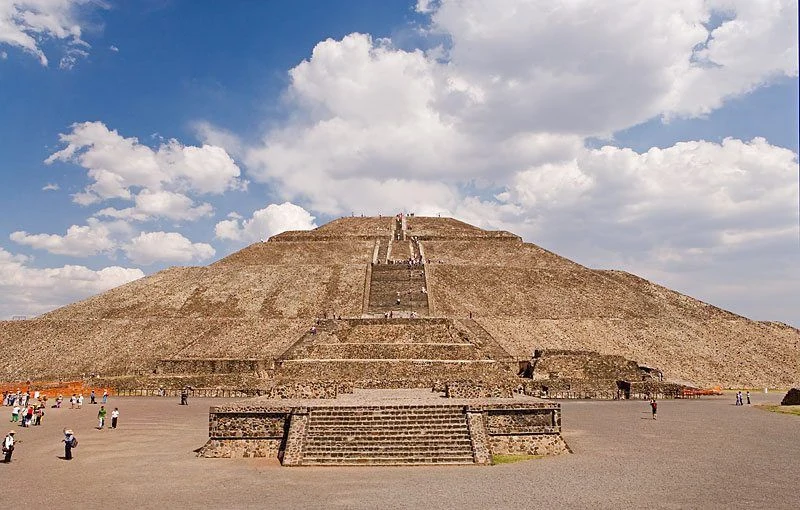
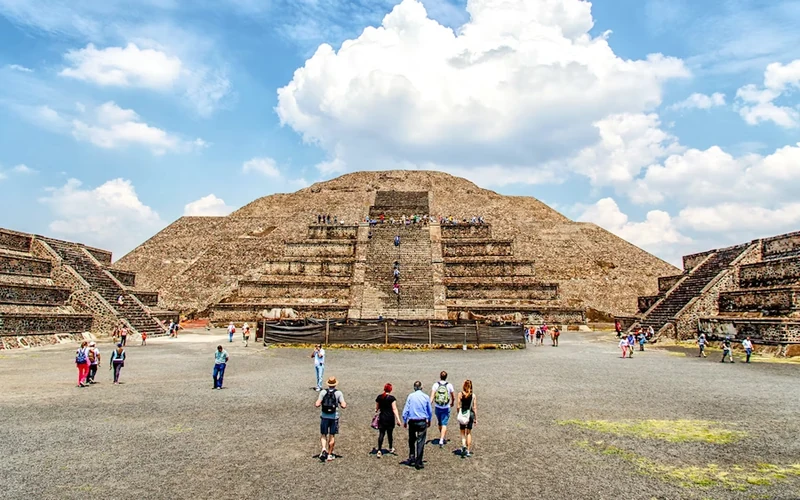
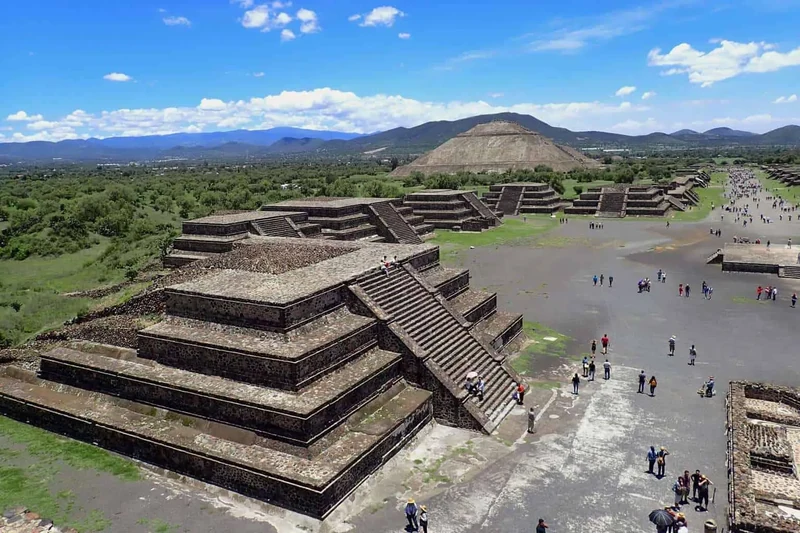
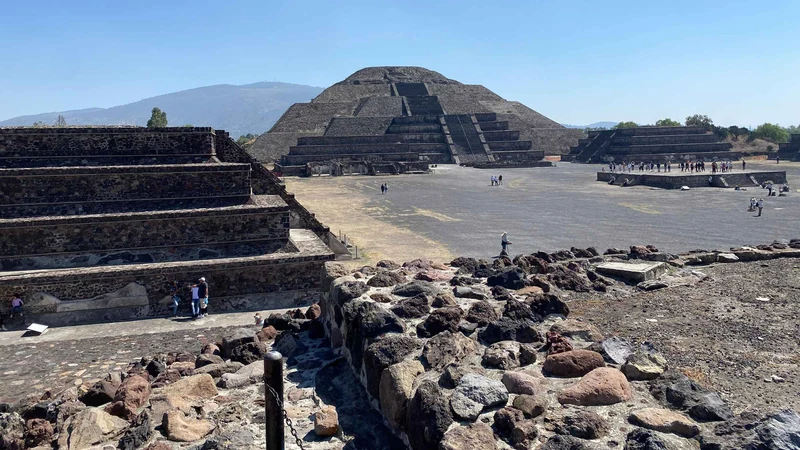
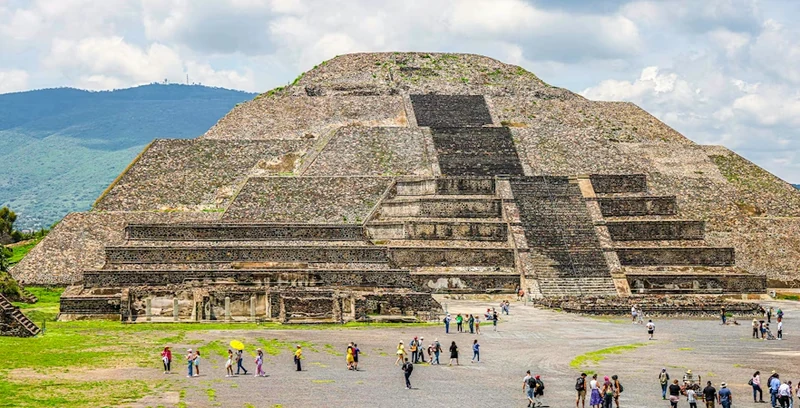
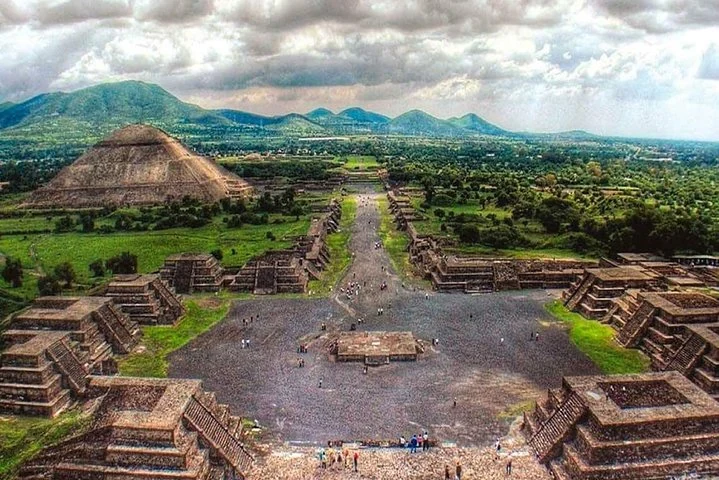
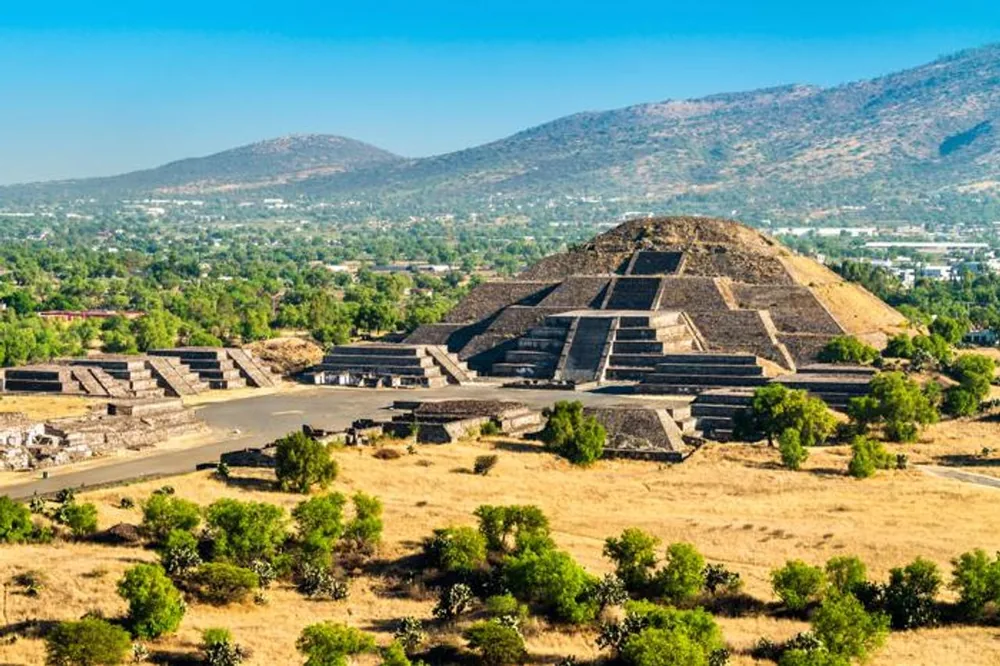
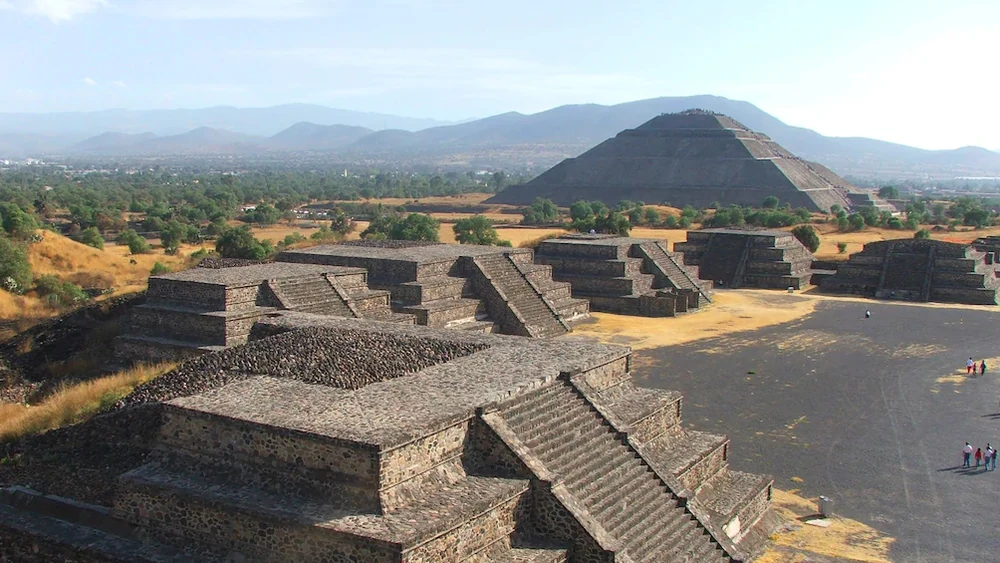
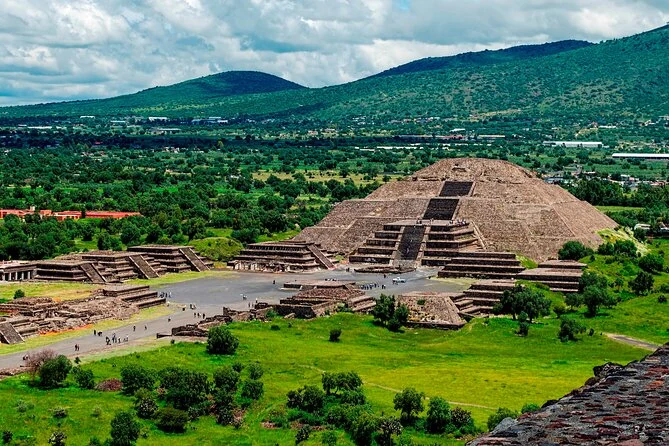
The Pyramid of the Sun is the third-largest pyramid in the New World, about 63 to 65 metres high, sitting on a base close in footprint to the Great Pyramid at Giza. The Pyramid of the Moon closes the northern end of the Avenue of the Dead and was built in seven overlapping phases, each one swallowing the last. The Temple of the Feathered Serpent, at the southern end inside the Ciudadela, carries the carved serpent heads that appear on every postcard — and it gets skipped by rushed itineraries, which is worth checking before you book.

The half-day tour and the private historian tour both start there deliberately.

You can no longer climb to the top

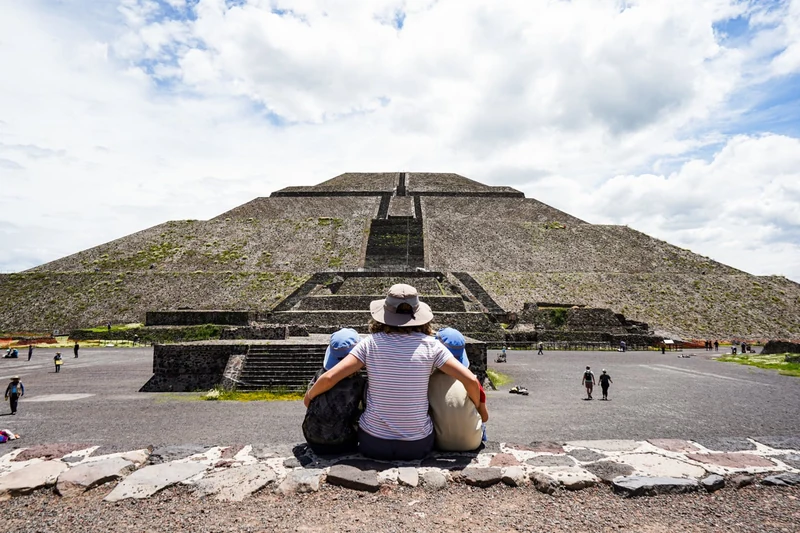
The summit climb of the Pyramid of the Sun — 248 steps — has been closed since 2020, after a fatal fall, and the closure has held. The Pyramid of the Moon is open only as far as its first platform. Older photos and a fair number of blog posts still show people standing on the summits, which sets expectations that the gate will not meet.

What remains is genuinely worth the trip: the first flight of stairs on the Sun pyramid gives a raised view down the avenue, and every guide covers the structures from ground level anyway. Anyone booking specifically to stand on top should know before they pay.

The Avenue of the Dead is the walk

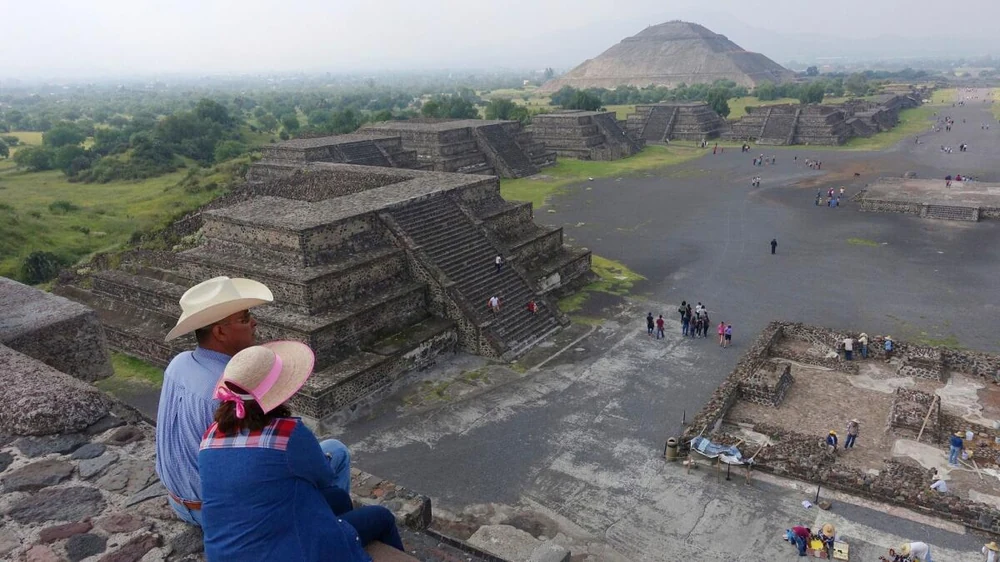
The central boulevard runs 2.4 kilometres north to south, aligned about 15.5 degrees east of true north — deliberately, on a sightline archaeologists still argue about. Walking it end to end is the tour. There is no shade anywhere along it, the surface is uneven volcanic gravel and stone, and the site sits at roughly 2,300 metres, where the sun burns faster and dehydration arrives sooner than most visitors expect.

Every listing that mentions physical difficulty is describing this walk, not the pyramids.

The Five Formats on Offer

Almost every Teotihuacan listing on the market is a variation of one of these five. Knowing which one you are buying explains most of the price gap.

FormatTypical priceLengthBest forTrade-off
Morning coach tour$36–$405–6 hoursFirst visit, afternoon left freeLarger buses; you share the site with the 10 AM wave
Early-access small group$68–$756–8 hoursPhotography, heat avoidance6:20 AM departure and a shopping stop
Three-site full day$719 hoursOne day, maximum historyAround two hours at the pyramids themselves
Private tour$135–$1445–8 hoursQuestions, pace, family groupsTwo to four times the shared price
Sunrise balloon$166+3–11 hoursThe aerial view of the whole gridPickup near 4:20 AM, weather-dependent

The $31 guide-only option at Gate 1 sits outside these five — it sells the guide and the ticket, and leaves the transport to you.

Which Teotihuacan Tour Fits Your Day

Ten listings sounds like a lot until you match them to what you actually want out of the morning. These are the six situations that cover most bookings.

First visit, and you want it done well

The Paseos Olmedo morning tour at $39.20 carries 7,632 reviews at 4.9, which is more feedback than the rest of this comparison combined. The coach holds up to 50, but it splits into groups of 9 to 12 per guide on arrival, so the site experience is small-group even though the transport is not. You are back in Mexico City by early afternoon.

The one thing to confirm at booking is your drop-off point — reviewers report it sometimes differs from the pickup point because of traffic routing.

You want the site quiet and cool

Two options buy you the early gate. The early-access small group leaves downtown at 6:20 AM, caps the group at 15 and includes fast-track entry, putting you on the avenue at 8 to 9 AM. The half-day tour departs at 7:55 AM and has you at the pyramids before 9 AM, an hour after the 8:00 opening, then has you back in the city between 1:00 and 1:30 PM.

The first costs $68 and includes a workshop stop; the second costs $38 and includes nothing but the ruins.

History first, shopping never

The no-commercial-stops tour exists specifically for travellers who resent the obsidian workshop. Experiencias Mexicanas removes every commission stop and spends the time on site instead — around three hours, covering the full avenue and all three complexes, with guides certified in archaeology and history. At $36.88 it is also among the cheapest here.

For the same instinct with a private guide, the five-hour historian tour covers five structures including the Feathered Serpent temple and has you back at your hotel by about 12:10 PM.

The day is the point, not just the ruins

Three listings make the meal the reason to book. The XIBALBA cave breakfast serves a traditional Mexican breakfast inside a volcanic cave and caps the group at 13, the smallest shared group in this comparison. The La Gruta tour eats inside the grotto restaurant that has been open since 1906 — the meal is at your own cost, so budget 300 to 500 MXN.

The Abuela's house tour is the outlier: breakfast and a red-and-green mole lunch cooked in the guides' grandmother's home, plus four family-made pulques, for $144.

One day, three chapters of Mexican history

The Tlatelolco, Guadalupe and Teotihuacan day covers the Aztec marketplace where the conquest ended in 1521, the basilica that draws around 20 million pilgrims a year, and the pyramids, for $71 across nine hours. Guide quality rates 4.9 across 266 reviews. The honest trade-off is arithmetic: three sites in one day leaves roughly two hours at Teotihuacan.

If the pyramids are the reason you came, book a dedicated tour and see the basilica on its own morning.

You are already out there, or driving yourself

The $31 guided walk at Gate 1 includes the entry ticket and skip-the-line security, and asks you to arrive on your own. It is the cheapest guided option at the site by a wide margin, using the same guides who run the pricier departures. Read the listing carefully: the inclusions mention transportation, but the description confirms none is provided.

Teotihuacan Entry Fee and Opening Hours

Entry is cheap and the tours include it. The reason to know the numbers anyway is that they tell you what a guided day is really charging you for.

What entry costs

General admission to the archaeological zone is 210 MXN for foreign visitors. At roughly 19 pesos to the dollar that is $11.05, so 210 ÷ 19 ≈ $11. Mexican nationals and foreign residents with proof of residence pay 50 percent, 105 MXN (about $5.50), and enter free on Sundays.

Visitors over 60, children under 13, retirees, pensioners, people with disabilities, and teachers and students with a valid card enter free. Tickets are sold at the site box office and on the official INAH page. Every guided tour in this comparison includes the ticket, so the fee is already inside the price you see.

Federal site fees are indexed each January, so the peso figure can edge up in 2027: the INAH page shows the current one. Source: INAH, Teotihuacan archaeological zone, INAH bulletin 106.

Hours, gates and the queue

The site opens at 8:00 AM and closes at 5:00 PM, with last admission at 4:30 PM, and the on-site museums keep shorter hours, roughly 9:00 AM to 4:30 PM. On the equinox weekend INAH can open earlier, as it did at 7:00 AM on the Saturday in 2026. There are five gates.

Gate 1, near the Ciudadela and the Temple of the Feathered Serpent, is where the guide-only listing meets its groups and where most independent visitors arrive. Fast-track or express security, sold as skip-the-line on several listings, matters most between 10 AM and noon when the coaches land together.

What a guided day is actually buying

Strip out the 210 MXN ticket, about $11, and a $38 half-day tour is charging roughly $27 for round-trip transport from central Mexico City, a certified bilingual guide for nearly three hours, and someone else handling the gate. Doing it independently costs about 220 MXN in buses and a full extra hour each way. The guide is where the value sits: without one, the Avenue of the Dead is a long walk past unlabelled stone.

The Crowd Clock at Teotihuacan

The site takes about 4 million visitors a year and they do not arrive evenly. This is the shape of a normal day, and it explains why departure time costs money.

  1. 1 8:00 AM — gates open The avenue is nearly empty and the light is low and raking, which is exactly what photographers come for. Early-access and half-day tours are built to be standing here now.
  2. 2 9:00 to 10:00 AM — the first wave Independent visitors and the earliest coaches filter in. Still comfortable, still shaded on the eastern faces, and the Pyramid of the Sun stairs have no queue.
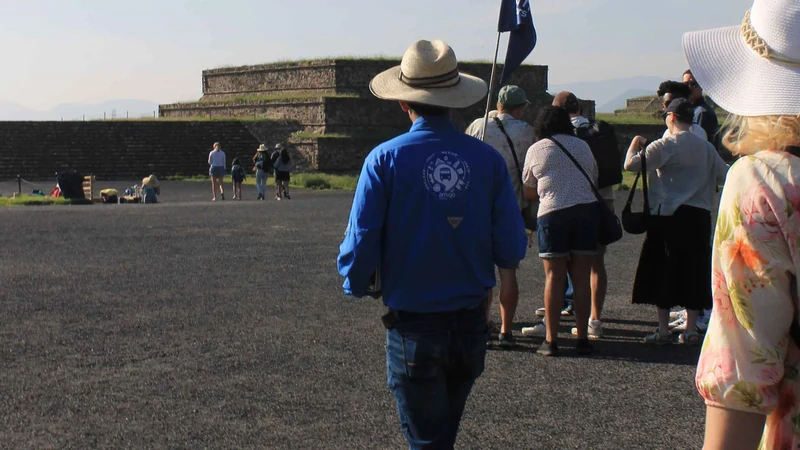
  3. 3 10:00 AM to 12:00 PM — peak coaches Most Mexico City tour buses arrive in this window. The avenue fills, vendors work the path, and the stair queues form. Temperature is climbing fast with nowhere to stand out of it.
  4. 4 12:00 to 3:00 PM — the heat Exposed ground temperatures reach 35°C and higher. Groups shorten their loops. This is when the morning tours are already driving back to the city.
  5. 5 3:00 to 4:30 PM — the second quiet window The coaches have gone. Light warms again, crowds thin, and the site is pleasant — but last admission is 4:30 PM and closing is 5:00 PM, so there is no long evening here.

Sunrise balloon flights sit outside this clock entirely: they launch before the gates open and land in time for an optional ground tour.

Spring Equinox at Teotihuacan 2027: Crowds, Hours and Rules

The equinox weekend of 20 and 21 March 2027 is the single most crowded stretch of the year at the pyramids. INAH runs a special operation for it, and the 2026 version shows what to plan around.

How many people come

INAH counted 38,103 visitors at Teotihuacan from Friday 20 to Sunday 22 March 2026, the busiest archaeological site in the country that weekend, ahead of Chichén Itzá at 24,791. The year before, Teotihuacan received 36,255 equinox visitors. The equinox itself fell on Friday 20 March, but the crowd peaked on the weekend.

In 2027 the equinox lands on a Saturday, so the whole peak sits on 20 and 21 March. Source: INAH bulletin 122.

Hours, gates and what is banned

For the 2026 weekend INAH opened the site at 7:00 AM on the Saturday and 8:00 AM on the Sunday, closing at 5:00 PM both days, with entry through Gates 1 to 5. Climbing the Pyramid of the Sun and any activity on the platforms was banned, so visitors gathered on the Plaza of the Sun and the Plaza of the Moon. Bags, backpacks, chairs, speakers, tents, drones, pets, alcohol and commercial activity were not allowed in.

Tickets were sold only at the site box office and on the INAH page. INAH published these rules on 13 March, a week ahead, so the 2027 rules will appear in the same window. Source: INAH bulletin 106.

Which tour to book for the equinox

The crowd builds from mid-morning, so the departures that reach the gate at opening matter most. The early-access small group is on the avenue at 8 to 9 AM, and the half-day tour arrives just before the gate opens. Coach departures that arrive between 10 AM and noon meet the full crowd.

Book weeks ahead, since the equinox weekend sells out first. Ground-level views of both pyramids are the whole experience, as the climbing rules explain.

When to Go, Month by Month

Central Mexico has one rainy season and it is an afternoon phenomenon, which suits a site that is best visited in the morning anyway.

  • Dec–FebDry, cold morningsClear skies and the best balloon conditions. Mornings start near 6°C at the launch field, afternoons reach 22°C. Bring a layer you can shed by 10 AM.
  • Mar–MayDry and hotThe hardest months on the avenue: afternoon highs of 28–30°C in the shade and considerably more on open stone. Early departures earn their premium here.
  • Jun–SepRainy seasonRain arrives as afternoon storms, not all-day drizzle. Mornings stay usable, greenery returns to the valley, and crowds thin. Balloon flights cancel more often.
  • Oct–NovThe sweet spotStorms have stopped, the valley is still green, temperatures sit around 24°C and the light is clean. Day of the Dead at the start of November fills every hotel in the valley.

Balloon flights depend on calm morning winds year-round; operators reschedule or refund rather than fly in wind, so leave a spare morning if it is the reason for your trip.

Teotihuacan in December to March: Crowds and Balloon Season

December to March is the dry high season, and it is also when Teotihuacan pyramids tours are hardest to get at short notice.

Christmas and New Year weeks

December is the busiest month of the year at the pyramids, driven by Mexican holiday travel on top of foreign visitors, and the site stays open on its normal 8:00 AM to 5:00 PM schedule. Book tours for Christmas week and the days either side of New Year well ahead, and choose the earliest departure, because the coach wave between 10 AM and noon is larger than in October or November. The month-by-month detail is in the best time to visit.

Cold mornings, warm afternoons

Dry-season dawns at the balloon launch field sit near 6°C and the afternoon reaches about 22°C, so a layer you can shed by 10 AM is the right kit. Skies are clear, which is why balloon operators describe this as their best flying season. What to pack is in what to wear.

Balloon flights in winter: timing and cancellations

The sunrise balloon flight collects around 4:20 AM, flies for 45 to 50 minutes and lands a little later from October to March than in summer. The launch decision is made at the field on the morning, based on wind. A flight cancelled for weather is rescheduled or refunded, and the listing allows free cancellation up to 24 hours before departure.

Wind can also change the route, so the flight may not pass directly over the ruins. Book the balloon early in your trip so a scrubbed morning can be rebooked. Full detail is on the balloon tour page.

Guided Tour or Going It Alone

Teotihuacan is genuinely reachable without a tour, and for some travellers that is the right call. Here is the honest arithmetic on both.

The independent route

Metro Line 5 to Autobuses del Norte, then a Teotihuacan bus from the Terminal Central del Norte — they run frequently and take about an hour once you are moving, so budget 1.5 to 2 hours each way door to door. Add 210 MXN at the gate. Total cost lands near 300 MXN, roughly a third of the cheapest guided day, and you set your own pace entirely.

What the tour is actually selling

Three things, in order of value: a certified guide who turns unlabelled stone into a city, transport that removes two bus changes at either end of a hot day, and the gate handled for you. On the cheapest listings the guide is the whole product — the $31 Gate 1 walk sells exactly that and nothing else, which is the clearest way to see what the commentary is worth on its own.

When independent wins

If you have a full day, you speak enough Spanish to sort out a bus platform, and you want to sit in the Ciudadela for an hour without a group waiting on you, go independently and book a guide at the gate or the $31 listing. If you are on a tight Mexico City itinerary, travelling with people who tire, or want to be back for an afternoon booking, the guided day is worth every peso of the difference.

What to Bring, and What Catches People Out

Nearly every negative review of a Teotihuacan tour is about heat, water or footwear. None of it is the operator's fault and all of it is preventable.

Sun, water, shoes

A wide-brim hat is not optional — there is no shade on the avenue and the site sits at 2,300 metres, where UV is stronger than the temperature suggests. Bring more water than feels sensible; several listings include none and reviewers who arrived without it paid vendor prices at the gate. Shoes need grip and closed toes: the surface is uneven volcanic stone, and balloon operators require closed flat shoes to board at all.

Cash, and what it is for

Bring pesos in small notes. Lunch is at your own cost on several tours, tips for guides are customary and expected, and the artisan stops are cash-friendlier than card-friendly. If your tour includes La Gruta, budget 300 to 500 MXN for the meal itself.

The lunch-box trap

On the early-access tour, the box-lunch add-on is a packed lunch for the bus, not a ticket to the restaurant buffet — travellers have booked it expecting the meal and been surprised. The buffet is paid separately at the restaurant. Read the meal line on any listing twice before you assume lunch is handled.

What You Walk Past on the Avenue

A three-hour guided visit covers these in roughly this order, north to south or the reverse depending where your group enters.

  • Pyramid of the Sun Third-largest pyramid in the New World, about 63 to 65 m high. Summit closed since 2020; the first flight of stairs is open and gives the avenue view.
  • Pyramid of the Moon Closes the northern end of the avenue, built in seven nested phases. Open to its first section only, five platforms and 47 steps, reopened.
  • Temple of the Feathered Serpent Inside the Ciudadela at the southern end. Carved serpent heads, and the tunnel beneath it that produced the site's biggest recent finds.
  • Palace of Quetzalpapalotl The best-preserved murals and carved pillars on site, beside the Moon plaza. Frequently skipped by rushed itineraries.
  • Jaguar and Puma murals Painted panels along the avenue that survive at ground level — the clearest surviving evidence the whole city was once painted red.
  • Avenue of the Dead 2.4 km of dead-straight boulevard, offset 15.5° east of north. The walk itself, with no shade at any point.

Morning or Afternoon, and How to Miss the Tourist Traps

Two questions come up more than any others in traveller forums: which half of the day to take, and how to avoid the shopping stop that eats an hour of it. They have concrete answers.

Morning wins on almost every measure

Light, temperature and crowds all move the same direction through the day, and all three favour an early gate. At 8 AM the avenue is empty enough to photograph without waiting, the eastern faces of both pyramids are still in raking light, and the stone has not yet absorbed the day's heat. By 11 AM the same walk is a queue in full sun.

Every listing in this comparison except the balloon flights is a morning departure, which tells you what the operators have concluded too. The only real argument for the afternoon is the 3:00 to 4:30 PM window after the coaches leave — genuinely quiet, genuinely pleasant, and cut short by the 4:30 PM last admission.

What a tourist trap looks like here

It is rarely a scam and almost always a commission. The standard version is a stop at an obsidian workshop where an artisan demonstrates carving, a tequila, mezcal or pulque tasting follows, and a shop sits at the end of the room. Thirty to sixty minutes, no obligation to buy, and a genuine link to the site's history — Teotihuacan grew rich on the obsidian trade.

Whether that is a trap or a highlight depends entirely on whether you wanted the time at the ruins instead.

How to book around it

Read the itinerary, not the summary. Two listings here state the absence explicitly: the no-commercial-stops tour is built as the anti-shopping option, and the half-day tour puts its only free time at the end, after the guided portion, where you can walk away from it. The Gate 1 walk has no vehicle at all, so there is nowhere to be driven.

Everything else in the comparison includes some version of the workshop, and the honest reading is that it costs you around 45 minutes of a day that already has a 4:30 PM deadline.

One more time-eater nobody mentions

Pickup rounds. A tour that collects from five points across Mexico City spends 40 to 60 minutes doing it before the drive even starts, which is why a 6:20 AM departure reaches the gate at 8 and a 7:55 AM departure reaches it at 9. If your hotel is at the last pickup point you get the shortest bus time; if it is at the first you sit through the whole circuit.

Ask which point you are on when the confirmation arrives.

What Archaeologists Have Found Under the Pyramids

The site is still being excavated, and the last two decades produced more than the century before them. A good guide will cover this; it is also the reason the same ruins reward a second visit.

The tunnel under the Feathered Serpent

In 2003 a sinkhole opened at the foot of the Temple of the Feathered Serpent after heavy rain, exposing a sealed tunnel running about 100 metres under the pyramid, roughly 18 metres down. Excavation took more than a decade and produced thousands of objects: jade figurines, jaguar remains, imported shells, rubber balls, and walls dusted with pyrite to glitter in torchlight. Nobody has found the royal burial the tunnel was expected to lead to.

The tunnel itself is not open to visitors, but the Ciudadela above it is where most guided circuits begin.

The city was painted red

The grey stone everyone photographs is the underlayer. Teotihuacan was plastered and painted — the pyramids and much of the residential city in deep red, with murals in ochre, green and blue across the apartment compounds. The clearest surviving evidence is at the Palace of Quetzalpapalotl and the jaguar and puma panels along the avenue, which is why guides stop there even though the pyramids are the reason people came.

The iPad reconstructions that two listings here advertise exist precisely to bridge that gap between what stands and what stood.

Who lived here, and what ended it

The city was multi-ethnic — excavated compounds show distinct Zapotec, Maya and Gulf Coast neighbourhoods, with imported pottery and burial practices to match. That is unusual enough that Teotihuacan is often described as the first cosmopolitan city in the Americas. Around 550 AD the ceremonial centre burned.

The fire was concentrated on the palaces and temples rather than the residential districts, which points to internal revolt rather than invasion, though drought and the collapse of trade routes are argued alongside it. Nobody has settled it, and any guide who tells you the answer with certainty is telling you a story.

Going With Children, Older Travellers or Limited Mobility

The listings use the phrase 'not suitable for wheelchair users' almost universally, and it is worth understanding what the ground actually demands before you rule the day in or out.

What the terrain really is

The Avenue of the Dead is uneven volcanic gravel and stone with shallow steps at intervals, and the walk from the Ciudadela to the Moon plaza is 2.4 kilometres one way. There is no shade, no seating beyond the stone itself, and toilets only near the gates. None of the pyramid climbing is compulsory — the summit of the Sun pyramid is closed anyway, and guides deliver their commentary from ground level.

The exertion is the distance and the sun, not the stairs.

Children

Under-13s enter free, and the site rewards them more than most ruins do because the scale is legible without any archaeology. The constraints are the hours and the heat: an early departure with a shorter total day, like the half-day tour that is back in the city by 1:30 PM, works far better than a nine-hour three-site itinerary. The balloon flights set a minimum age of 4 and require closed flat shoes for everyone in the basket.

Older travellers and mobility

Two listings say plainly that they do not recommend the tour for older adults or travellers with walking difficulties, and the private historian tour additionally rules out under-15s, pregnant travellers and anyone with back or heart conditions. A private tour is the format that adapts: your own vehicle, your own pace, and a guide who can shorten the circuit rather than hold a group. If walking distance is the limiting factor, say so when booking a private option, since the guide can drive between the site's two main gates rather than walk the full avenue.

An Early-Access Morning, Hour by Hour

This is the shape of the 6:20 AM departures — the format that buys you the quiet site. Times shift with traffic and pickup order.

  1. 06:20

    Downtown meeting point

    Groups form at a fixed point in central Mexico City rather than at hotels. The guide waits, but the schedule is built around beating the coach wave, so the van does not linger.

  2. 06:45

    North out of the city

    Around 45 minutes to the valley on a road that is empty at this hour and gridlocked two hours later. Most guides use the drive for the history: who built the city, why it emptied, what you are about to see.

  3. 07:30

    Coffee stop

    A 15-minute break at a roadside café. This is the last reliable food before the site, and several tours include nothing else until the afternoon.

  4. 08:00

    Through the gate

    Fast-track entry where the listing includes it. The avenue is quiet, the light is low and long, and the stairs on the Pyramid of the Sun have no queue.

  5. 08:15

    The guided circuit

    About three hours on foot: the Ciudadela and the Feathered Serpent temple, the length of the Avenue of the Dead, the Pyramid of the Sun, then the Moon plaza and the Quetzalpapalotl murals.

  6. 11:15

    Obsidian workshop

    On the tours that include it — a demonstration of the volcanic glass the city traded, and a tequila or mezcal tasting. Around 45 minutes, with no obligation to buy. Two listings here skip it entirely.

  7. 12:15

    Lunch

    Optional on most listings, at your own cost unless you selected a meal option at booking. Check what your booking actually includes before you assume.

  8. 14:00

    Back in Mexico City

    Drop-off at or near the morning meeting point. Return times run from 1:00 PM on the half-day tours to 3:30 PM on the longer formats.

What Pairs Well With the Pyramids

Teotihuacan sits an hour from the city, which makes the drive worth padding — or worth protecting, depending on what you are after.

The Basilica of Guadalupe

The most visited Catholic pilgrimage site in the world takes around 20 million people a year, and it sits on the road back into the city, which is why so many operators bolt it on. The three-site day does it properly with Tlatelolco added — the Aztec marketplace where the conquest ended in 1521 — for $71 across nine hours.

The valley from above, then from the ground

The sunrise balloon flight sells a full-day version that lands, feeds you, and puts you on a three-hour guided site tour afterwards. From the air the city reads as a grid, which is impossible to grasp from inside it; from the ground you get the carving and the scale. Doing both in one morning is the strongest single-day argument in this whole comparison, and also the longest day at 11 hours.

Food as the second act

Two listings turn the meal into the reason to go: breakfast inside a volcanic cave on the XIBALBA tour, and lunch inside the 1906 grotto restaurant on the La Gruta tour. If you want the version that is not a restaurant at all, the Abuela's house tour cooks in a family home in a village beside the site.

What Travellers Said After Going

★★★★★ ★★★★★
Wonderful day trip and tour to the pyramids at Teotihuacan. Our guide Antonio and driver Daniel were very knowledgeable and nice. One pro tip: take a hat because the sun is intense.
Caren · United States · April 2026
★★★★★ ★★★★★
Alicia was AMAZING. INFORMATIVE AND FUN.
Kelly · United States · May 2026
★★★★★ ★★★★★
Mario and Alfonso were wonderful guides — very informative, friendly, and most importantly FUN!
Dayna · United States · April 2026
★★★★★ ★★★★★
There was a lot of walking and climbing up steep steps. Participants who are normally physically active every day should be fine. It would be super easy for athletic people and maybe challenging for people with knee problems.
LB · United States · April 2026

Verified GetYourGuide and Viator reviews for the tours on this page, quoted with their original dates. Traveller feedback reviewed: 13,800+ reviews across the ten listings.

Teotihuacan Pyramids Tours — Common Questions

What is the best tour of Teotihuacan?

There is no single answer, because the listings optimise for different things. By volume of satisfied feedback it is the Paseos Olmedo morning tour — 7,632 reviews at 4.9, $39.20, back in the city by early afternoon. For a quiet site, the early-access small group at $68 gets you through the gate before the coach wave. For history without a shopping stop, the no-commercial-stops tour at $36.88. For a view nothing else matches, the sunrise balloon flight.

Is a Teotihuacán tour worth it?

For most visitors, yes — and the reason is the guide rather than the transport. The site has almost no interpretive signage, so unguided you are walking 2.4 km past unlabelled stone. A guided day also removes two bus changes and the ticket queue. If you have a full day, some Spanish and want to linger, going independently and booking the $31 guided walk at Gate 1 gets you the commentary without the coach. A fuller look at the trade-offs is in our honest read on whether Teotihuacan is worth visiting.

Do you need a tour guide for Teotihuacan pyramids?

You do not need one to enter — general admission is 210 MXN for foreign visitors and you can walk in and wander. You need one to understand what you are looking at. Guides at the site are certified by INAH and the good ones cover the tunnel discoveries under the Feathered Serpent temple, the murals at Quetzalpapalotl, and why a city of 100,000 people emptied. Every listing here includes one.

How many hours do you need to visit Teotihuacan?

Three hours on site covers the Avenue of the Dead, both main pyramids and the Ciudadela at a walking pace that lets you stop. That is what most guided tours in this comparison allocate. Two hours — what the three-site day leaves — is enough for the highlights but not the murals or the Feathered Serpent temple. Five hours or more is for photographers and people who want the museums as well.

Can you still climb the Pyramid of the Sun?

Not to the top. The 248-step summit climb has been closed since 2020 and the closure has not been reversed. The first flight of stairs is open and gives a raised view down the avenue, and the Pyramid of the Moon is accessible as far as its first platform. INAH repeated the ban on climbing the Pyramid of the Sun for the 2026 equinox weekend (INAH bulletin 106). Photos showing people on the summits predate the closure. The current rules for both pyramids, including the Moon pyramid's reopened first section, are set out in what you can and cannot climb.

How much are Teotihuacan pyramids tickets?

General admission is 210 MXN for foreign visitors, about $11 at roughly 19 pesos to the dollar. Mexican nationals and foreign residents with proof pay 105 MXN and enter free on Sundays. Children under 13, students and teachers with valid ID, retirees and visitors over 60 enter free. Every tour compared here includes the ticket in its price. What the ticket covers Every cost of the day, from the bus to the meal, is broken down in what a visit actually costs.

How do you get to Teotihuacan from Mexico City without a tour?

Metro Line 5 to Autobuses del Norte, then a Teotihuacan bus from the Terminal Central del Norte. Allow 1.5 to 2 hours each way door to door and about 220 MXN in fares, plus the 210 MXN entry. It works well if you have the whole day; it costs you the early gate, since the first buses do not beat the 6:20 AM tour departures to the site. The full route, fares and timings are in our guide to going without a tour.

What should you bring to Teotihuacan?

A wide-brim hat, more water than you think, sunscreen and closed shoes with grip. There is no shade on the 2.4 km avenue, midday ground temperatures pass 35°C, and the site sits at about 2,300 metres where the sun bites harder. Bring pesos in small notes for lunch, tips and the artisan stops. The full list The full list, season by season, is in what to wear and bring.

What time do the pyramids open?

The archaeological zone opens at 8:00 AM and closes at 5:00 PM, with last admission at 4:30 PM. The on-site museums run roughly 9:00 AM to 4:30 PM. Coach tours cluster between 10 AM and noon, so an arrival at opening or after 3 PM gives you the two quiet windows of the day. The crowd clock Month-by-month conditions and the quietest windows are in the best time to visit.

Are the tours cancellable?

Every listing in this comparison offers free cancellation with a full refund up to 24 hours before the start time, and most allow reserve-now-pay-later. Cancellation terms are set by the operator and the booking platform, not by this site, and are confirmed at checkout. Balloon flights are additionally weather-dependent and are rescheduled or refunded when winds do not allow a launch.

How crowded is Teotihuacan at the spring equinox?

Very. INAH counted 38,103 visitors across the 2026 equinox weekend, up from 36,255 the year before, and the crowd gathers on the plazas of the Sun and the Moon because climbing is banned. In 2027 the equinox falls on Saturday 20 March, so expect the same pattern across 20 and 21 March. The earliest departures, such as the early-access small group, are the way to see the avenue before the crowd. Equinox rules and numbers

Are Teotihuacan hot air balloon flights cancelled in winter?

December to February has the calmest, clearest mornings of the year, so cancellations are less common than in the rainy season, but the call is still made at the launch field on the morning and depends on wind. A flight cancelled for weather is rescheduled or refunded, and the sunrise balloon listing allows free cancellation up to 24 hours before. Leave a spare morning. Winter flying

What is the best day of the week to go to Teotihuacan?

A weekday morning. Entry is free on Sundays for Mexican nationals and residents, so Sunday is the busiest day, and the coaches arrive between 10 AM and noon on every day. Tuesday to Friday at the 8:00 AM opening gives the quietest avenue. The early-access tour is built around that opening slot.

Which is older, Teotihuacan or Chichén Itzá?

Teotihuacan, by several centuries. Its great pyramids date to the first centuries AD and the city peaked around 400 AD, then burned and emptied around 550 AD, while Chichén Itzá's best-known buildings were raised from roughly 800 AD onward. What the city actually was

Pick your gate time — from a $31 guided walk you reach yourself to a sunrise flight over the whole valley.

Early-access departures cap at 13 to 15 travellers and fill first

Check Availability
Teotihuacan tours from $31 Check Availability