 Teotihuacan Pyramids Tours
The Best Time to Visit Teotihuacan, Month by Month
The best time to visit Teotihuacan is November to February, when the dry season brings clear skies, daytime temperatures in the low to mid 20s Celsius, and crowds that are moderate rather than overwhelming. The runner-up window is September and October, cooler and quieter than the dry-season peak but with rain tapering off by then. The window to avoid, if the weather alone is your concern, is the middle of the wet season, June through August, when sunny mornings give way to afternoon storms most days. None of that rules out a visit outside those months. It just changes which hour of the day you should be walking the Avenue of the Dead.
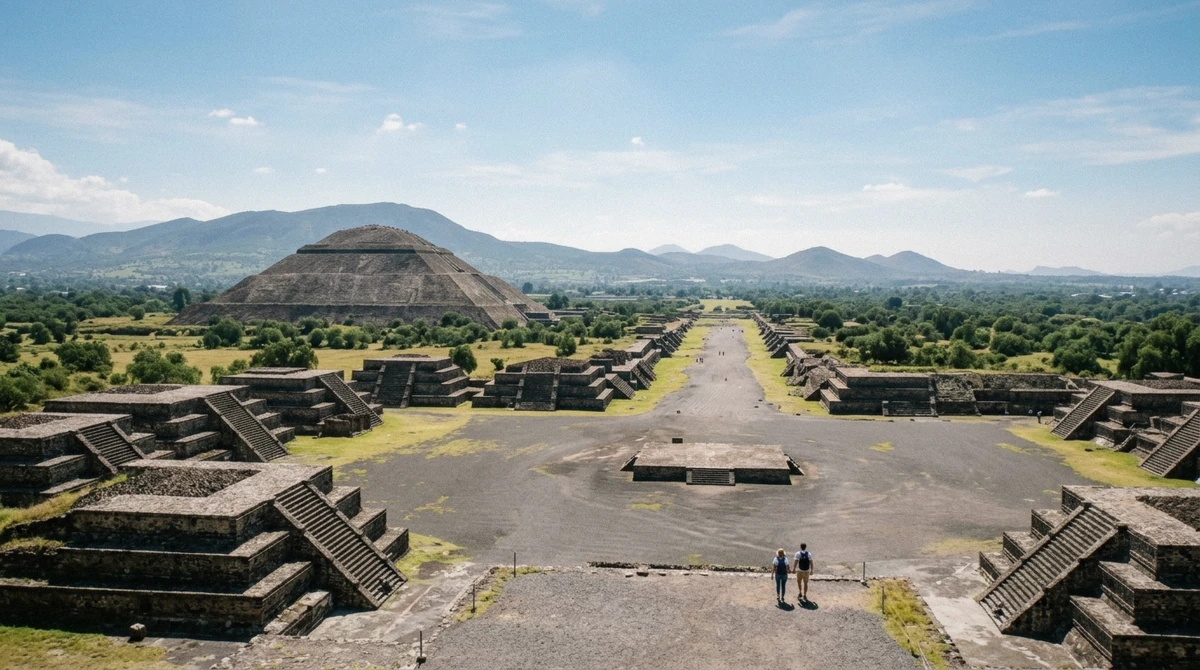
Quick answer
November to February is the best window: dry, clear, and only moderately busy. September and October are the value pick, cooler than the dry-season peak with the rains easing off. Avoid the middle of the wet season, June to August, unless you plan your day entirely around morning visits.
Key takeaways
- November brings clear skies at 22 to 25 degrees Celsius and moderate crowds, the single strongest month on the calendar
- December is the busiest month of the year, so book well ahead if that's your window
- May is the hottest month, with open stone on the Avenue of the Dead passing 35 degrees at midday
- The spring equinox on 21 March draws more than 12,000 visitors and is worth avoiding unless the ritual itself is the reason for your trip
- Rain in June through October arrives as afternoon storms, not all-day drizzle, so early departures keep mornings usable
- The site's own hours never change: gates open at 08:00, last admission is 16:30
The Short Answer
Weather first, crowds second
Teotihuacan has one real seasonal split: a long dry season from November to May, and a wet season from June to October where rain shows up in the afternoon rather than all day. Within the dry season, November through February is the sweet spot, clear and comfortably warm without the heat that builds through March, April and May. Within the wet season, September and October are the strongest picks, since the heaviest rain has usually passed by then and crowds are thin.
Crowd patterns run mostly opposite to comfort. December is the busiest month of the year regardless of weather, and the days around the 20 and 21 March equinox draw a crowd unlike any other date on the calendar. If you want good conditions without a packed site, the shoulder months, late October through mid-November and again in February, do the best job of both.
Month by Month
Reading the table
Figures below are typical for each month rather than guaranteed; Mexico's high central plateau can run a few degrees either side of any average in a given year. Verdicts are ranked against each other, not against some fixed ideal, so "good value" and "best overall" both describe a worthwhile visit, just for different reasons.
| Month | Weather | Crowds | What it's good for |
|---|---|---|---|
| January | Dry, sunny days, cool nights | Moderate | Comfortable temperatures, reliable skies |
| February | Dry, clear, still cool in the mornings | Moderate | Thinner crowds than the December peak |
| March | Driest stretch of the year begins, warming fast | High around the 20-21 equinox | Great weather, but plan around the equinox crowd |
| April | Hot, dry, dusty air off the plateau | Moderate to high | Reliable weather, watch for Easter week |
| May | Hottest month, air near 25°C, open stone over 35°C by midday | Moderate | Early mornings only, avoid midday entirely |
| June | Wet season begins, sunny mornings, afternoon storms | Moderate, low season starting | Good mornings if you plan around the storm window |
| July | Wettest month, sun early then heavier rain later | Lower | Green landscape, morning visits only |
| August | Rainy season continues, humid afternoons | Lower | Workable with an early start, similar to July |
| September | Rain tapering off, longer sunny stretches | Lowest of the year | Best value month on the calendar |
| October | Rain easing further, air cooling down | Low to moderate | Strong shoulder pick, fewer storms than summer |
| November | Clear skies, 22 to 25°C, dry season begins | Moderate | Best overall month |
| December | Dry, sunny days, cool nights | Busiest month of the year | Good weather, book departures well ahead |
The pattern in one line
May is the hottest month on the ground, December is the busiest in the ticket line, and November is the one month that avoids both problems at once.
Which window suits which trip
The month that suits a photographer is not the month that suits a family with a five-year-old, and the balloon calendar runs on wind rather than rain. This is the same year read four ways.
| Trip type | Best window | Why | What to accept |
|---|---|---|---|
| First visit, general sightseeing | October to November | Green valley, clean air, 22 to 25 degrees, crowds off their summer peak | Hotels fill around Day of the Dead at the start of November |
| Photography | November to February | Clear skies, low sun angle at opening, sharp distance haze | Cold starts near 6 degrees at dawn |
| Balloon flight | November to April | The calmest morning winds of the year, fewest cancellations | Pre-dawn temperatures of 10 to 15 degrees, sometimes lower |
| Families with young children | June to September | Mornings stay usable, afternoons are cooler than spring, fewer coaches | Plan around the afternoon storm and be off the avenue by early afternoon |
| Lowest crowds | June to September, weekdays | Rainy season thins the coach traffic more than it thins the mornings | Rain gear, and a spare morning if the balloon is the point |
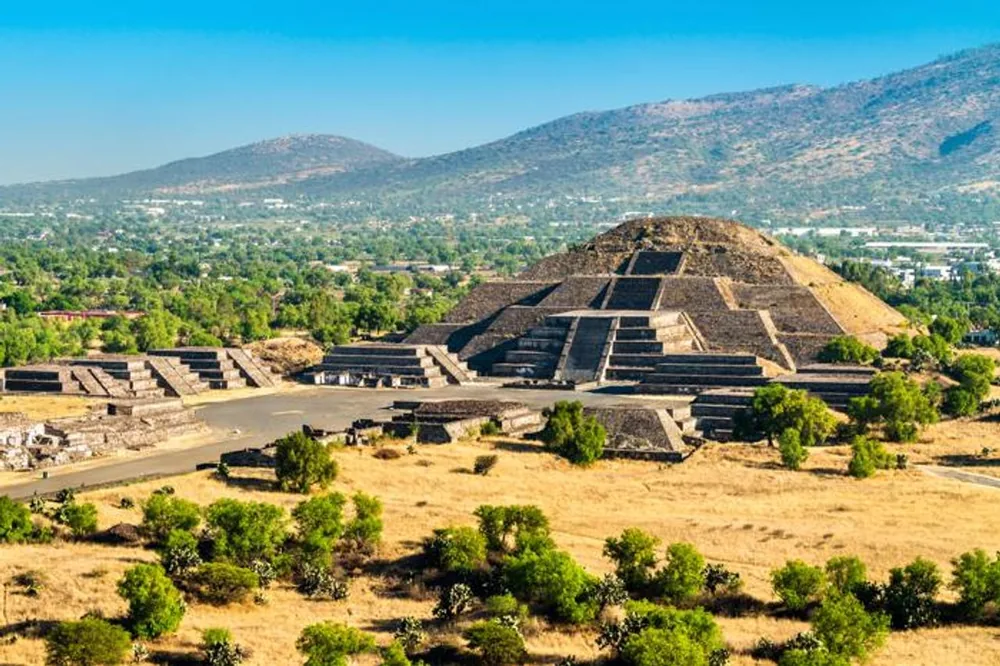
Dry Season vs Rainy Season
What the afternoon storms actually mean
The dry season runs November to May and the wet season runs June to October. The word "rainy" makes the wet months sound worse than they are for a day trip. Rain here almost always arrives as an afternoon storm lasting an hour or two, not a grey, all-day drizzle. Mornings through the wet season stay sunny and usable more often than not, which is exactly why every guided tour on this site departs early rather than at midday.
The practical rule: in June through October, plan to be walking the Avenue of the Dead before noon. By the time storm clouds build over the valley in the early afternoon, a morning tour is already back on the bus. An afternoon-only visit in these months carries real odds of getting rained on, while a morning visit in the same week often doesn't see a drop.
The dry season has its own trade-off in the other direction. Clearer skies mean stronger, more direct sun with nothing overhead to soften it, so the heat builds earlier in the day than the wet-season cloud cover allows. A dry-season morning still beats a wet-season afternoon on comfort, but it rewards the same early start rather than a lazier one.
Best Time of Day
It matters more than the month
The site opens at 08:00 and the first hour is close to empty regardless of the season. Coach tours land between roughly 10 AM and noon, our homepage crowd clock breaks down that pattern hour by hour, and by then the paths around the Pyramid of the Sun are genuinely crowded even in a quiet month like September.
An early-departure tour that puts you on site around 8 to 9 AM does more for your visit than picking the perfect month. You get the Avenue of the Dead with soft light and no queue at the Pyramid of the Moon's reopened section, before the day's heat and crowds have built at all. The half-day option that has you at the pyramids just before the 9:00 opening works the same angle from a different departure time. If a fixed schedule only leaves you a midday slot, expect both more heat and more people than a morning visit, whatever the calendar says.
The Spring Equinox
What happens on 20 and 21 March
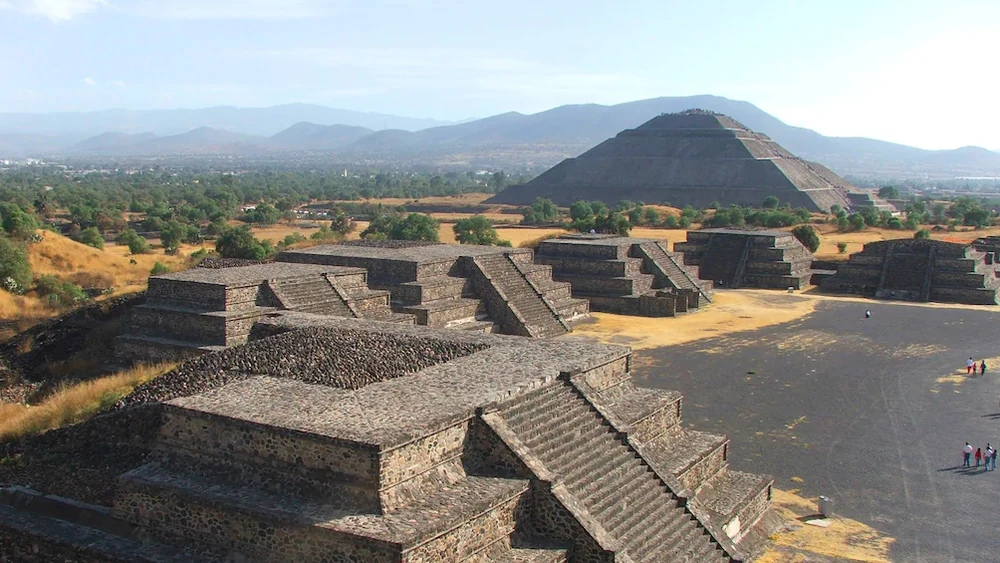
Every year on 20 and 21 March, crowds dressed in white gather at Teotihuacan for the spring equinox, a tradition tied to the site's ancient alignment with the sun. In 2025 more than 12,000 people came for it, and peak years have drawn far larger crowds still. The atmosphere is genuinely unlike any other day at the site: chanting, arms raised toward the sun, a real sense of shared ritual.
Worth knowing before you plan around it: the old image of that crowd standing on the summit of the Pyramid of the Sun no longer applies, since the climb to the top has been closed since 2020. The 2026 equinox happens at ground level and on the Pyramid of the Moon's reopened first section instead. If the ritual itself is why you're travelling, come for it and accept the crowd. If you simply want good weather and manageable numbers, avoid these two days and pick almost any other date in March instead.
Balloon Season
When flights actually fly
Sunrise balloon flights over the pyramids run through most of the year, but they depend on calm morning wind, so the dry season's more stable air gives the most consistent departures. Pickup for the sunrise balloon flight runs around 4:20 AM, and pre-dawn temperatures at the launch field sit at 10 to 15 degrees Celsius even in summer, cooler again in the dry-season months. Layers matter more here than a single warm jacket, since the temperature climbs fast once the sun is up and the flight is over.
Because the flight depends on wind rather than rain, wet-season mornings can still fly, but cancellations are more common when afternoon storm systems are already building overnight. If a balloon flight is the centrepiece of your trip, the dry season months give the safest odds of the flight actually going ahead as booked.
Worst Times to Go
Say it plainly
Two windows genuinely work against you. Midday in May, when open stone on the Avenue of the Dead passes 35 degrees Celsius and there's no shade anywhere along its 2.4 km length, is uncomfortable enough to shorten most people's visit. And the 20-21 March equinox, while genuinely worth seeing for the ritual, is the single most crowded stretch of the entire year, with wait times and foot traffic well beyond a normal day.
A quieter third case is worth naming too: a midday arrival in July or August, when the morning's clear sky has already started clouding over for the afternoon storm. It isn't dangerous, but it's the combination most likely to end a visit early, soaked and short on the walk you'd planned. None of these three cases are reasons to skip Teotihuacan. All three are reasons to either avoid those specific dates and hours, or plan your visit for the first hour after the 08:00 opening, when heat, storms and crowds are all at their lowest regardless of the month.
Best Time Questions People Ask
What is the best month to visit Teotihuacan?
November, for the combination of clear skies, comfortable temperatures around 22 to 25 degrees Celsius, and only moderate crowds. December has similar weather but is the busiest month of the year.
Is Teotihuacan worth visiting during the rainy season?
Yes, if you go in the morning. Rain from June to October arrives as afternoon storms lasting an hour or two, not an all-day drizzle, so a morning tour usually finishes before the weather turns.
How far ahead should you book to avoid the equinox crowds?
If you want to avoid the 20-21 March crowd rather than join it, any other date in March keeps the same dry, warming weather without the more than 12,000 extra visitors those two days bring.
Which is better, morning or afternoon, at Teotihuacan?
Morning, in every season. The site opens at 08:00 and stays relatively quiet until the coach tours land between roughly 10 AM and noon; afternoons run hotter and busier and, in wet-season months, carry real odds of a storm.
When are hot air balloon flights most reliable at Teotihuacan?
Through the dry season, November to May, when calmer morning air gives the most consistent departures. Flights still run in wet-season months, but overnight storm systems occasionally push cancellations.
Is May too hot to visit Teotihuacan?
It's the hottest month, with air temperatures near 25 degrees Celsius and open stone on the Avenue of the Dead passing 35 degrees at midday. A visit works, but only if you go early and treat midday as a break, not a walking window.
How much time do I need to visit Teotihuacan?
Three hours on site is the working answer, and it is what most guided visits allocate. That covers the Ciudadela and the Temple of the Feathered Serpent, the full 2.4 km walk down the Avenue of the Dead, the base of the Pyramid of the Sun and the Moon plaza with its first section climb, at a pace that lets you stop. Two hours gets the highlights and loses the murals at the Palace of Quetzalpapalotl. Five hours or more suits photographers and anyone who wants the on-site museums, which keep shorter hours of roughly 09:00 to 16:30. Add an hour each way for the drive from Mexico City, and remember the gate stops admitting at 16:30 whatever time you set out.
If a specific date is already locked in, the month matters less than you'd think. Getting there for the 08:00 opening and being done with the open, shadeless stretch of the Avenue of the Dead before the heat and the coach tours arrive fixes most of what a bad month can do to a visit, which is exactly why morning departures from Mexico City dominate the listings on this site. For the detail either side of this page, see what to wear and bring to teotihuacan, the best photo spots at teotihuacan.