 Teotihuacan Pyramids Tours
The Best Photo Spots at Teotihuacan
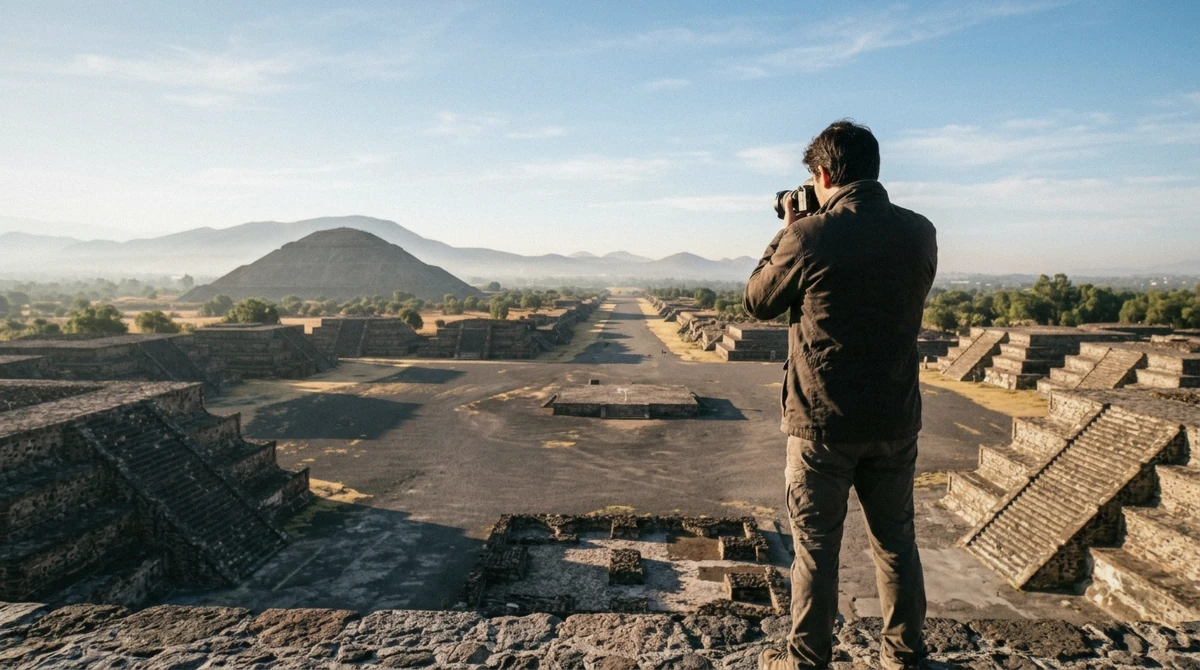
The best photo spots at Teotihuacan all turn on one frame, and it is the one most people come for: the Avenue of the Dead running straight to the horizon from an elevated platform, has not been fully available since 2020. The Pyramid of the Sun's summit closed to climbers that year and the closure is now permanent. What changed the picture again was May 2025: the Pyramid of the Moon reopened, but only to the top of its first section, five platforms and 47 steps. That platform is now the only elevated public viewpoint down the avenue, which makes it the anchor of every shot list below. This guide sets out where to stand, what time to arrive, what each frame actually contains, and what the rules say about drones, so the trip is planned around light and access rather than guesswork at the gate.
Quick answer
The best single photo spot at Teotihuacan is now the first platform of the Pyramid of the Moon, five platforms and 47 steps, reopened in May 2025, because it is the only elevated place left to shoot the Avenue of the Dead in one frame. Beyond that platform, the site rewards ground-level composition: the Pyramid of the Sun at sunrise, carved serpent heads at the Ciudadela in side light, and murals at the Palace of Quetzalpapalotl. Arrive at the 08:00 opening for clean light and empty frames before coach groups land between 10 AM and noon.
Key takeaways
- The Moon platform is the only elevated shot left down the avenue since the Sun pyramid's summit closed
- Gates open at 08:00; that first hour is the difference between a clean frame and a crowded one
- Four numbered spots on the map below, all reachable on foot from the main gates
- Drones need INAH authorisation and are not permitted on a normal visit
- For an aerial frame without a permit, the sunrise balloon flight runs 45 to 50 minutes from $166
- The early-access tour puts you on site at 08:00 to 09:00, before the light and the crowds change
The Short Answer
Four shots worth planning for
Teotihuacan photographs well because the site itself is built on an axis, roughly 15.5 degrees east of true north, so straight lines and long shadows do most of the composition work without effort. The four frames that repay planning are the avenue from height, the Sun pyramid at first light, the carved detail most visitors walk past, and, for the small number of people who book it, the view from a balloon basket at sunrise.
What has changed the list is access, not aesthetics. Before 2020 the classic shot was the avenue from the Sun pyramid's own summit, higher and more central than the Moon platform. That vantage is gone and is not coming back, so the Moon pyramid's reopened first section carries more weight in this list than it would have five years ago.
None of the four shots require specialist access or a paid add-on beyond a standard entry ticket, except the balloon frame. That matters for planning, because it means the photography trip and the general visit are almost the same itinerary, just walked in a different order and started earlier.
How this list was built
The spots below come from the site's own layout, current access rules confirmed through August 2026, and the pattern in recent visitor photography: which frames keep appearing, which used to appear and no longer can, and which are physically inaccessible without a permit. Nothing here is guesswork about where a nice photo might exist; every spot is a place a visitor can actually stand on a normal ticket, at a time the gates are actually open.
Photo Spots at a Glance
Four ground spots cover the site's set pieces; a fifth, the balloon flight, is included separately because it is a booked activity rather than a place you walk to.
| Spot | Best time | The shot you get | How to get there |
|---|---|---|---|
| Pyramid of the Moon, first platform | 08:00 to 09:00 | The Avenue of the Dead in one straight line, from the only elevated public point left | Walk the full avenue from Gate 1 or 2, about 25 to 35 minutes |
| Pyramid of the Sun, base and steps | 08:00 to 08:30, low sun behind the summit | The 63-metre pyramid face lit low, silhouette or rim light depending on the exact minute | Roughly midway along the avenue, reachable from any gate |
| Temple of the Feathered Serpent, Ciudadela | 09:00 to 10:00, side light | Carved serpent and Tlaloc heads in raking light that shows the stone relief | Nearest to Gate 1, at the southern end of the avenue |
| Palace of Quetzalpapalotl | any time, shaded courtyard | Painted murals and carved obsidian-eyed pillars, the best-preserved detail on site | Behind the Pyramid of the Moon, a short walk from the plaza |
| From the balloon basket | sunrise, 45 to 50 minutes airborne | The full grid of the city from above, the only true aerial frame without a drone permit | Separate booking, pickup around 4:20 AM |
Map of the Best Photo Spots
All four ground spots sit on or just off the Avenue of the Dead and are reachable on foot within the site. Numbers match the write-ups below.
The Avenue From the Moon Pyramid: the Only Elevated View Left
What the first section actually is
The Pyramid of the Moon reopened to climbers on 19 May 2025 after five years of conservation work. Access is permitted only to the top of the first section, five platforms and 47 steps, with the upper levels still closed. That first section sits high enough to look straight down the 2.4 km Avenue of the Dead toward the Ciudadela, with the Pyramid of the Sun rising on the left of the frame.
Before the Sun pyramid's summit closed in 2020, that was the higher and more central vantage for this exact shot. It is not reopening, so the Moon platform is now the only elevated public point on site, and every version of this composition anyone shoots today comes from there.
- Arrive at the 08:00 opening and walk straight to the Moon pyramid before the crowd builds
- Low sun at that hour rakes along the avenue and separates the stone tiers from the shadow between them
- Keep the frame simple: avenue, low walls either side, the Sun pyramid catching light on the left
- Coach tours land between 10 AM and noon, and the platform gets crowded fast once they arrive
Booking it deliberately
The early-access tour departs Mexico City at 6:20 AM specifically to put small groups on site at 08:00 to 09:00, ahead of the main wave. If the Moon platform shot is the reason for the trip, that timing is worth paying for rather than hoping to beat the crowds on a later departure, since a standard mid-morning tour arrives after coach buses already have the platform's foot traffic moving both directions.
The climb itself is short, five platforms and 47 steps, and does not require any particular fitness beyond what the rest of the site demands. It does mean carrying a camera bag up an uneven stone stairway, so a strap rather than a loose bag in hand is worth the extra minute to set up before starting the climb.
Sunrise on the Pyramid of the Sun
Shooting the base, not the summit
The Pyramid of the Sun is the third-largest pyramid in the world at about 63 metres, and its 248-step stairway no longer reaches a summit anyone can stand on. The frame that still works is from the base, low, with the sun rising behind or beside the structure so the steps read as bands of light and shadow rather than a flat wall of stone.
Gates open at 08:00, which is when the light rakes lowest along the 2.4 km avenue and before the crowds arrive. By 09:00 the light has already flattened out and lost most of its shape.
The Details Everyone Walks Past
Carved stone and painted plaster
Most visitors walk the avenue looking up at the pyramids and miss the carved detail at eye level. The Temple of the Feathered Serpent at the Ciudadela carries serpent heads and Tlaloc masks projecting from the facade, and they photograph best in side light, roughly 09:00 to 10:00, when the raking angle brings out the depth of the carving rather than flattening it under overhead sun. Shoot low, close to the base, so the heads sit against open sky rather than the crowd behind them.
The Palace of Quetzalpapalotl holds the best-preserved murals and carved pillars on the site, in a shaded courtyard behind the Moon pyramid where the light is even enough to shoot at any hour. Along the avenue itself, jaguar and puma mural panels survive at ground level, faint but visible evidence that the whole city was once painted rather than bare stone. These panels sit at the height of a passing shoulder and are easy to miss entirely if the itinerary only budgets time for the three big structures; a guide who stops here deliberately is worth more than one who walks past.
- Serpent heads at the Ciudadela: shoot low and close, side light 09:00 to 10:00
- Quetzalpapalotl murals: shaded courtyard, any hour, watch for even light rather than a strong angle
- Jaguar and puma panels: ground level along the avenue, easy to miss, ask a guide to point them out
From the Air: the Balloon Frame
The one frame ground photography cannot give you
Every ground spot above shows part of the site. The aerial alternative is the sunrise balloon flight, 45 to 50 minutes airborne, from $166 per person, and it is the only way to see the full grid of the ceremonial centre in a single frame without a drone.
The honest trade-off is timing and cost: pickup runs around 4:20 AM, and the balloon flight is priced well above the ground tours. For anyone building the trip specifically around photography rather than a general visit, it is the frame nothing else on this list can replace.
Gear, Drones and What Is Not Allowed
What to actually carry
A single body and a mid-range zoom cover everything on this list; nothing here demands specialised gear. Bring a lens cloth for dust off the open ground, and expect strong midday contrast, so the two opening windows above matter more than equipment choice. A phone camera handles the wide avenue shots and the murals at the Palace of Quetzalpapalotl perfectly well; the zoom mainly earns its place on the carved serpent heads at the Ciudadela, where a longer lens compresses the relief without needing to climb the barrier rope.
A tripod is legal to carry on site but rarely useful. The best light windows above are bright enough for a handheld shutter speed, and a tripod slows down a walk that already has a lot of ground to cover before the crowd arrives. Spare batteries matter more than a tripod does: the pre-dawn balloon option runs cold enough that batteries drain faster than expected, and there is nowhere on site to buy a replacement.
Drone flying requires INAH authorisation and is not permitted on a normal visit. There is no workaround for this on a standard ticket, and operators do not offer it as an add-on. Anyone who has seen drone footage of the site online is looking at footage shot under a permit process this guide does not cover, not something achievable by simply bringing one along.
The camera bag
What actually goes in the bag before you leave the hotel.
- One body and a mid-range zoom, rather than a full kit; nothing on this shot list needs specialised lenses
- A spare battery, packed for the cold: pre-dawn temperatures at the balloon launch field run 10 to 15 degrees Celsius even in summer, and batteries drain faster in the cold than expected
- A lens cloth for dust: the ground is volcanic gravel, and it gets on gear as easily as it gets on shoes
- Water, since the two best photo windows sit either side of the midday heat and there's no shade to pause in between
- A wide-brim hat, for the same reason the light works, low sun with no shade above you
- No drone, unless you already hold INAH authorisation; there is no on-the-day workaround
Timing Your Shots Around the Crowds
Two windows, one to avoid
The site's own crowd clock sets the photography window as much as the light does: gates open at 08:00 near-empty, the first wave builds through 09:00, and coach tours peak between 10 AM and noon, which is when clean, people-free frames stop being realistic on the avenue or the Moon platform.
A second, quieter window opens in the afternoon as the coach groups leave, though by then the light has lost the low, raking quality that makes the morning shots work. For photography specifically, the morning window is worth protecting; arrive at or near opening and expect the Moon platform and Sun pyramid base to be usable for roughly ninety minutes before the light and the crowd both change.
Midday, roughly noon to 15:00, is the window to avoid outright. Ground temperatures on the open avenue pass 35 degrees Celsius with no shade anywhere along the 2.4 km stretch, the light goes flat and directly overhead, and the platforms are at their most crowded. A photographer with only one window to choose is better served giving up an hour of sleep for the 08:00 opening than trying to salvage a midday visit.
Light by hour
Matching the crowd clock to the light hour by hour makes the trade-off concrete: the same clean light that shows up at opening disappears well before the crowd does.
| Time | Light | Best subject | Crowd level |
|---|---|---|---|
| 08:00 | Low, raking light along the avenue | Avenue of the Dead from the Moon platform, Sun pyramid base | Near-empty |
| 09:00 to 10:00 | Climbing, still warm-toned | Carved serpent and Tlaloc heads at the Ciudadela in side light | First wave arriving |
| 10:00 to 12:00 | Flattening overhead light | Little worth planning for; save this window for the shaded Palace of Quetzalpapalotl instead | Peak coaches |
| 12:00 to 15:00 | Flat, harsh, directly overhead; ground temperatures pass 35 degrees Celsius | Shaded interiors, such as the murals at the Palace of Quetzalpapalotl | Heat keeps numbers high but movement slows |
| 15:00 to 16:30 | Softening again, longer shadows return | A second pass at the avenue and the pyramid bases before last admission | Second quiet window, last entry 16:30 |
Questions About Photographing Teotihuacan
What is the best place to photograph Teotihuacan?
The first platform of the Pyramid of the Moon, reached by 47 steps reopened in May 2025. It is the only elevated public point left since the Sun pyramid's summit closed, and it is the one spot that puts the full length of the Avenue of the Dead in a single frame.
Can you take photos during a guided tour?
Yes, on every tour in the catalog. One listing notes professional cameras and tripods are not allowed on that particular booking, so check the individual tour's terms if you plan to bring a tripod or a large rig.
What is the best time of day for photos at Teotihuacan?
The first ninety minutes after the 08:00 opening. Light rakes low along the avenue and the Moon platform and Sun pyramid base are still uncrowded before coach tours arrive between 10 AM and noon.
Can you still climb the Pyramid of the Sun for photos?
No. The summit has been closed to climbers since 2020 and the closure is permanent, so the classic photograph taken from the top of that pyramid is no longer possible from any tour or independent visit.
Are drones allowed at Teotihuacan?
No, not on a normal visit. Drone flying requires INAH authorisation, and no tour or independent ticket includes or arranges that permission.
How many steps is the Pyramid of the Moon climb?
Forty-seven steps across five platforms make up the first section that reopened in May 2025. Upper levels of the pyramid remain closed to visitors.
Is the balloon flight worth it just for photos?
For a specific aerial frame of the full site grid, yes, since it is the only way to get that shot without a drone permit. At $166 per person and a pre-dawn pickup, it is a deliberate add-on rather than something to book casually.
Which is older, Chichen Itza or Teotihuacan?
Teotihuacan, by several centuries, which is why the two sites photograph so differently. Teotihuacan's ceremonial centre was already complete around 400 AD and the city emptied around 550 AD, while Chichen Itza's main building phases ran from roughly 600 to 1200 AD. The practical difference for a camera is scale and sightlines: Teotihuacan gives you a 2.4 km axis with two pyramids framing it, and the only elevated public vantage point is now the first section of the Pyramid of the Moon, 47 steps, reopened in May 2025.
The shot list at Teotihuacan changed in 2025, and most online galleries still show the old one. Plan around the Moon platform, the 08:00 opening, and the fact that the Sun pyramid's summit is gone for good, and the photos still hold up against the ones taken before the rules changed. For the detail either side of this page, see can you climb the pyramids at teotihuacan, the best time to visit teotihuacan, month by month.
The departures that put you inside at opening are listed under early-access Teotihuacan tours.