 Teotihuacan Pyramids Tours
Which Pyramids Are Older, Mexican or Egyptian?
The Egyptian pyramids are older, and not by a little. The Great Pyramid of Giza went up around 2600 BCE, roughly 2,800 years before the Pyramid of the Sun at Teotihuacan, and the oldest Egyptian pyramid, Djoser's, is older still. So which pyramids are older, Mexican or Egyptian? This page gives the dates, then compares height, volume and purpose, and ends with how to see the Mexican ones from Mexico City.
Quick answer
Egyptian pyramids are older: Djoser's Step Pyramid dates to about 2670 BCE and Giza's Great Pyramid to about 2600 BCE, while Teotihuacan's Pyramid of the Sun dates to about 200 CE, a gap of roughly 2,800 years. Mexico wins on volume, not age: the Great Pyramid of Cholula is the biggest in the world.
Key takeaways
- Even the oldest large Mexican pyramids, from the Olmec era around 900 BCE, are about 1,700 years younger than Giza
- Egypt wins on height: Khufu stands about 138 m today, against about 63 to 65 m for the Pyramid of the Sun
- Mexico wins on volume: Cholula holds about 4.45 million m3, nearly double Khufu's 2.4 million
- The shapes differ too: Egyptian pyramids are smooth-sided royal monuments, Mexican ones are stepped temple platforms, explained below
- Teotihuacan is the easiest Mexican pyramid to visit, about 50 km from Mexico City: see the tours
Visit the Mexican Pyramids From Mexico City
Teotihuacan is the closest big pyramid site to Mexico City and the only one where a day tour is routine. These tours suit someone comparing the pyramids.
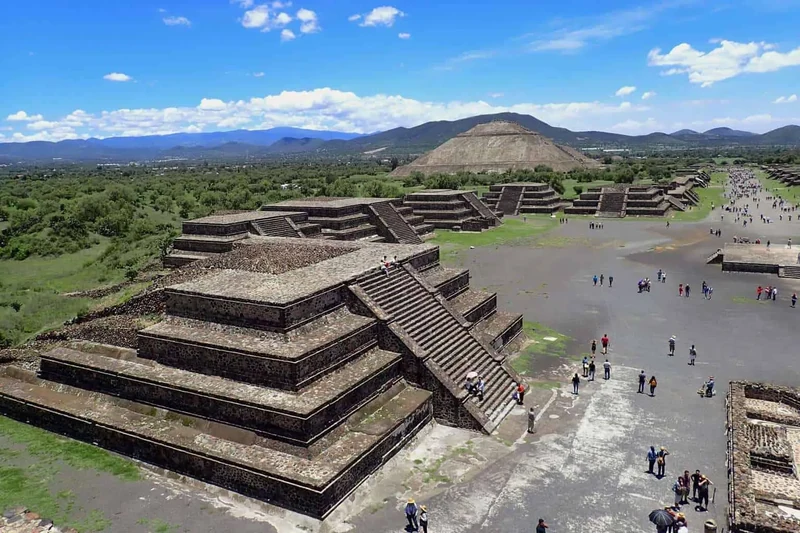
Teotihuacan No-Commercial-Stops Tour with Certified Guides
For history-first travelers: Experiencias Mexicanas strips out every commission-earning stop that standard group tours include, spending the time at the pyramids instead — about 3 hours on site plus a Pemex restroom stop en route. All guides are certified in archaeology and history, and the tour ran even for a single booked participant. One honest caveat from a review: water is not provided and sunscreen isn't flagged in advance — bring both, or you'll buy them at inflated prices at the site.
- Cancellation
- Free cancellation, full refund
- Operator
- Experiencias Mexicanas
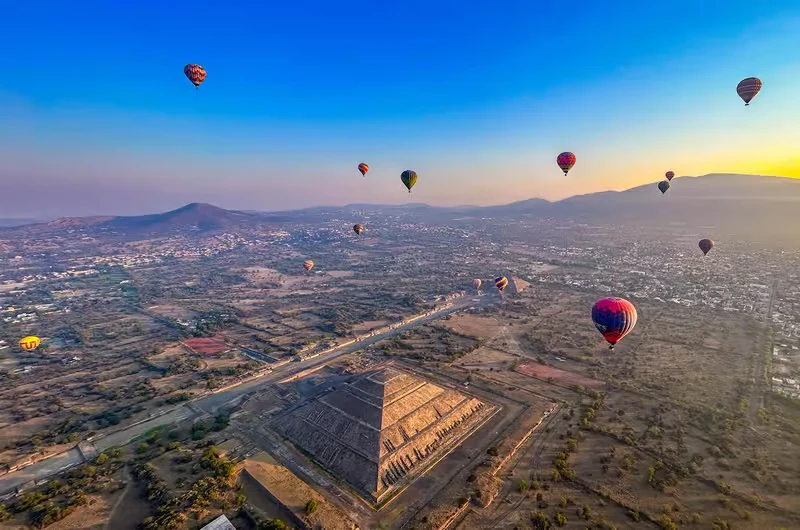
Teotihuacan Sunrise Hot Air Balloon Flight
From the air you see what ground touring can't show — the full scale of the Avenue of the Dead and the grid precision of the city, with pilots making several passes over the main structures. All three booking options include the post-landing sparkling wine toast and a flight certificate, and the full-day version adds the archaeological site and the Basilica of Guadalupe. Breakfast and lunch are at your own cost, and closed flat shoes are mandatory — no sandals, backpacks, or selfie sticks in the basket. Be warned: the transport option means a genuinely early pickup around 4:20 AM, and reviewers note the 11-hour full day is intense.
- Cancellation
- Free cancellation, full refund
- Operator
- None stated
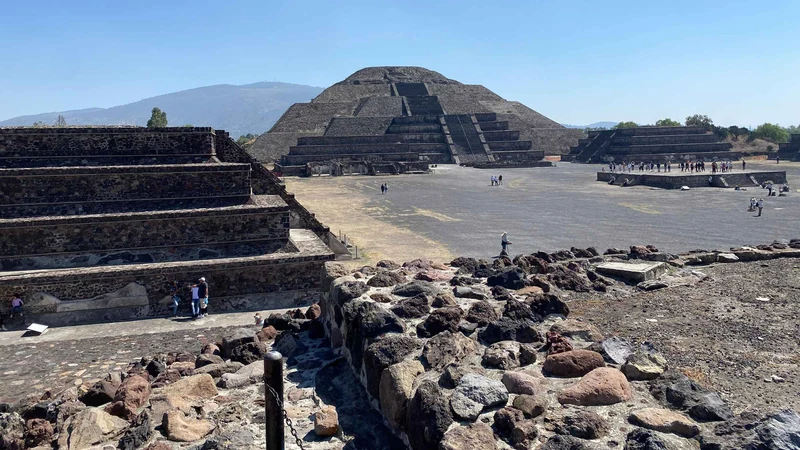
Private Teotihuacan Tour with Historian Hector (5 Hours, SUV Pickup)
This is the pyramids-only option for people who want depth without the 8–11 hour day: Hector, a historian versed in Nahuatl language and Teotihuacan cosmology, drives you in a private SUV, covers five structures including the often-skipped Pyramid of the Feathered Serpent and Palace of Quetzalpapalotl, and has you back at your hotel by about 12:10 PM. It scores a perfect 5.0 across all 10 reviews. Be aware it is not suitable for children under 15, pregnant women, or travelers with back, heart, or mobility problems — and no food or beverages are included. Hotels outside the standard pickup areas need to send a full address before booking.
- Cancellation
- Free cancellation, full refund
- Operator
- Hector (private historian guide)
Which Pyramids Are Older, Mexican or Egyptian?
The dates, pyramid by pyramid
By the standard Egyptological dating, Egypt's pyramids start around 2670 BCE with the Step Pyramid of Djoser at Saqqara, the first Egyptian pyramid and the earliest colossal stone building in Egypt. The Great Pyramid of Giza followed around 2600 BCE, built in about 26 years under the pharaoh Khufu. Dating varies by a few decades between Egyptologists, so read every date below as approximate.
Mexican pyramids begin later. The Olmec of the Gulf Coast built the Great Pyramid at La Venta, the largest Mesoamerican structure of its time, between about 900 and 400 BCE. Teotihuacan's Pyramid of the Sun followed around 200 CE. The best-known Maya pyramid, El Castillo at Chichen Itza, belongs to the 8th to 12th centuries CE, with its last major construction probably between 900 and 1000 CE. The Aztec state that Spaniards conquered came later still, between 1428 and 1521.
A comparison table of ages
The table shows approximate construction dates and how many years each Mexican pyramid is younger than Giza, using 2600 BCE for the Great Pyramid. Dates for early periods are scholarly estimates.
| Pyramid | Place | Built about | Younger than Giza by about |
|---|---|---|---|
| Step Pyramid of Djoser | Saqqara, Egypt | 2670 to 2650 BCE | Older than Giza by about 50 to 70 years |
| Great Pyramid of Khufu | Giza, Egypt | 2600 BCE | Baseline |
| Great Pyramid of La Venta | Gulf Coast, Mexico | 900 to 400 BCE | About 1,700 to 2,200 years |
| Pyramid of the Sun | Teotihuacan, Mexico | About 200 CE | About 2,800 years |
| El Castillo | Chichen Itza, Mexico | 8th to 12th century CE, last work 900 to 1000 CE | About 3,500 to 3,600 years |
Which Pyramids Are Older, Egypt or Aztec?
Egypt's are about 4,000 years older than the Aztec empire
The Aztec Empire is the youngest civilization in this comparison. Its capital Tenochtitlan was founded in 1325, the Triple Alliance formed in 1428 and the empire fell on 13 August 1521. Measured from the Great Pyramid's construction around 2600 BCE to 1428 CE, that is about 4,000 years.
The Aztecs also did not build Teotihuacan. The Pyramid of the Sun and the Pyramid of the Moon were already ruins when the Aztecs arrived, as the Aztec or Mayan guide explains. Where Aztec pyramid ruins exist, they are in and around Mexico City, such as at Tlatelolco.
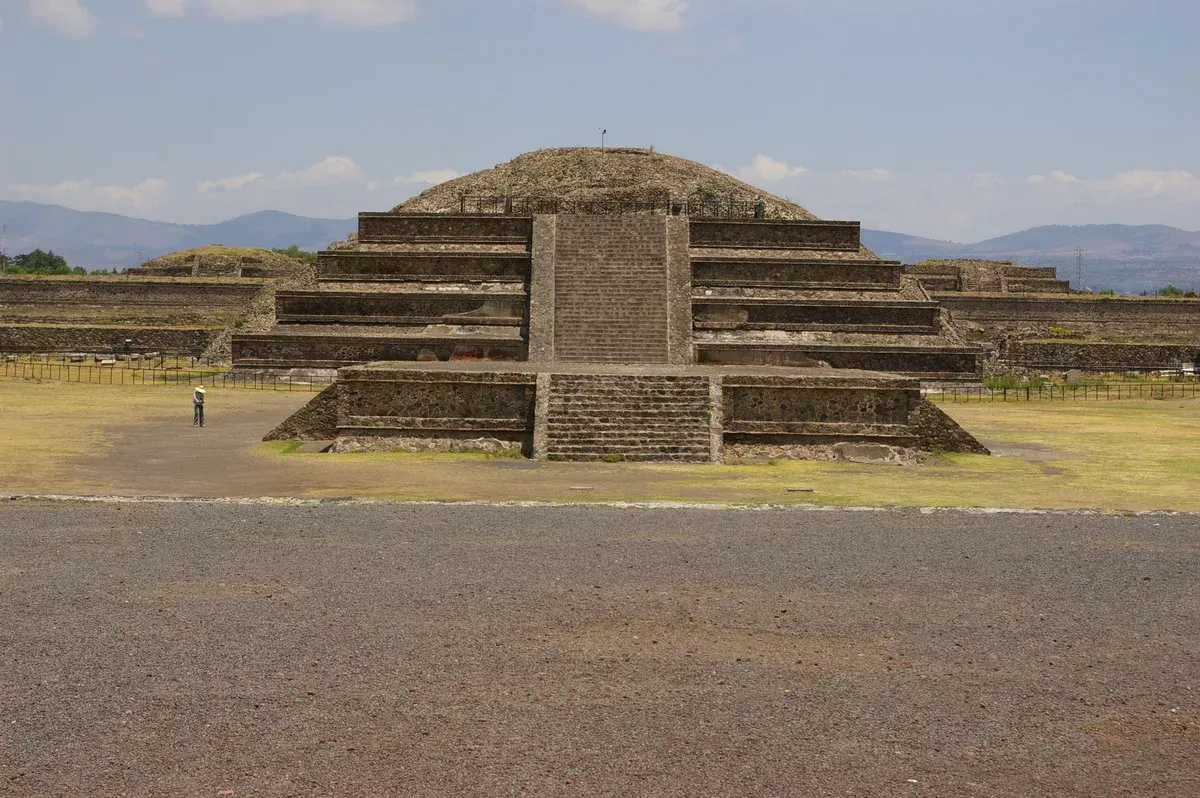
The Temple of the Feathered Serpent area at Teotihuacan. Photo: jschmeling, CC BY 2.0, via Wikimedia Commons
Which Pyramids Are Taller, Mexico or Egypt?
Egypt is taller, Mexico is bigger
Height and volume give different winners. Khufu's pyramid was 146.6 m when finished and is about 138 m today after the outer casing was stripped, which made it the tallest human-made structure on Earth for more than 3,700 years. No Mexican pyramid comes close in height. The tallest in Mesoamerica, La Danta at El Mirador just across the border in Guatemala, is about 72 m. In Mexico itself, Cholula reaches 66 m by Guinness's measure and the Pyramid of the Sun about 63 to 65 m.
Volume reverses the order. The Great Pyramid of Cholula in Puebla is the largest pyramid in the world by volume at about 4.45 million m3, ahead of La Danta at about 2.8 million and Khufu at about 2.4 million. Cholula is only 66 m tall but its base covers nearly 16 hectares. The Pyramid of the Sun holds about 1.18 million m3, which is roughly half of Khufu's bulk.
Height and volume compared
Figures come from the sources named under the table. Pyramid heights vary by survey, especially the Pyramid of the Sun, which authors give between about 63 and 75 m depending on which construction phase they measure.
| Pyramid | Height | Volume | Where |
|---|---|---|---|
| Great Pyramid of Khufu | About 138 m now, 146.6 m originally | About 2.4 million m3 | Giza, Egypt |
| Great Pyramid of Cholula | 66 m | About 4.45 million m3 | Puebla, Mexico |
| La Danta | About 72 m | About 2.8 million m3 | El Mirador, Guatemala |
| Pyramid of the Sun | About 63 to 65 m | About 1.18 million m3 | Teotihuacan, Mexico |
| Step Pyramid of Djoser | 62.5 m | Not stated | Saqqara, Egypt |
| El Castillo | 24 m, 30 m with the temple | Not stated | Chichen Itza, Mexico |
Are Mexican Pyramids the Same Kind of Monument as Egyptian Ones?
Stepped temple platforms versus royal monuments
The two traditions look different because they did different jobs. Egyptian pyramids are royal monuments built around the burial of a pharaoh, and the Great Pyramid had smooth white limestone sides. Mesoamerican pyramids were usually stepped, with a temple on the summit, which makes them closer to Mesopotamian ziggurats than to Egyptian pyramids.
At Teotihuacan the Pyramid of the Sun is a ceremonial platform, and the city has no royal burial pyramid of the Egyptian kind. Under the Pyramid of the Moon researchers found buried animals and headless bodies, which look like offerings made when the pyramid was built. Climbing is limited at Teotihuacan today, where only the first section of the Pyramid of the Moon is open, as our climbing guide explains.
What Is the Edge Fact That Most Comparisons Miss?
Giza was older at Teotihuacan's founding than Teotihuacan is today
Giza was already about 2,500 years old when the first Teotihuacan settlement appeared around 100 BCE. Teotihuacan itself is about 2,100 years old today. So the Great Pyramid had a longer life before Teotihuacan existed than Teotihuacan has had since.
That does not make the Mexican pyramids less impressive. The Pyramid of the Sun is the largest building in Teotihuacan and the third-largest ancient pyramid in the New World, after Cholula and La Danta. It is the one you can reach on a day trip from Mexico City, which Cholula and La Danta are not.
Which of These Pyramids Are World Heritage Sites?
Giza, Teotihuacan and Chichen Itza are all listed
UNESCO inscribed the Giza pyramids in 1979 as part of Memphis and its Necropolis, the pyramid fields from Giza to Dahshur. Teotihuacan followed in 1987 and Chichen Itza in 1988. The three are the pyramid sites most visitors mean when they compare Mexico and Egypt.
The listings also explain a rule visitors notice. Around 2006 INAH began closing monuments at Chichen Itza to the public after a climber's death, so you can no longer climb El Castillo or enter its chambers. Teotihuacan followed a similar path, and the details are in the climbing guide.
Listing years and what you can do
Years come from the World Heritage inscriptions as reported in the sources below the table.
| Site | Inscribed | What visitors can do |
|---|---|---|
| Giza pyramid fields, Egypt | 1979 | Walk the plateau around the pyramids |
| Teotihuacan, Mexico | 1987 | Walk the Avenue of the Dead, climb the first section of the Pyramid of the Moon |
| Chichen Itza, Mexico | 1988 | See El Castillo from the ground, no climbing since about 2006 |
How to See Teotihuacan From Mexico City
What the day costs and how it runs
Teotihuacan is fewer than 50 km north of Mexico City. General entry is 210 MXN, about $11 at 19 pesos to the dollar, and Mexican nationals and residents pay 105 MXN. The cost breakdown is on the cost page and the DIY bus route is in the no-tour guide.
Two timing facts matter. The site opens at 8:00 AM and the coaches arrive between about 10 AM and noon, so an early start gives you the pyramids almost alone. The equinox weekend of 20 and 21 March 2027 will be the busiest of the year. The early-access small-group tour leaves Mexico City at 6:20 AM and puts you on site at 8 to 9 AM. The no-commercial-stops tour spends about three hours at the ruins with guides certified in archaeology and history, which leaves time to set what you see against what you know of Giza. Other Teotihuacan tours trade time on site for extras such as a balloon flight or a lunch.
Choose by what you want from the pyramids
Figures are the operators' listed prices per person, except the private tour, which prices the vehicle for the group.
| Option | Best for | Duration | From |
|---|---|---|---|
| Sunrise balloon flight | Seeing the pyramids from above at dawn | 3 to 11 hours | $166 |
| Early-access small group | On site at 8 to 9 AM, before the coaches | 8 hours | $68 |
| No-commercial-stops tour | About three hours on site with certified guides | 6 hours | $36.88 |
| Half-day, first at the pyramids | Back in the city by 1:30 PM | 5 to 6 hours | $38 |
| Private historian tour | Deep answers to questions like this one | 5 hours | $135 |
Questions About Mexican and Egyptian Pyramids
Are the Egyptian pyramids older than the Mexican pyramids?
Yes. Djoser's pyramid dates to about 2670 BCE and the Great Pyramid to about 2600 BCE. The Pyramid of the Sun at Teotihuacan dates to about 200 CE, so Giza is older by roughly 2,800 years.
Which is the oldest pyramid in Mexico?
The Olmec Great Pyramid at La Venta, built between about 900 and 400 BCE, is the oldest of the large Mexican pyramids covered on this page. Teotihuacan's pyramids come about six centuries after the end of La Venta's main period.
Is the Pyramid of the Sun bigger than the Great Pyramid of Giza?
In base area it is close, at roughly 220 to 230 m per side against Khufu's 230 m, but it is shorter and holds about half the volume. See the table above. For a guided look at the Pyramid of the Sun, the early-access tour reaches the gate first.
Can you climb the pyramids at Teotihuacan like the ones in Egypt?
Only partway. The Pyramid of the Sun is closed to climbers and the Pyramid of the Moon opens only its first section. See the climbing rules.
Did Egypt and Mexico build pyramids independently?
Yes. The two traditions are separated by about 2,800 years and an ocean, and they differ in shape and purpose. Mesoamerican pyramids were stepped temple platforms, Egyptian ones were royal monuments.
How long does a Teotihuacan visit take?
The half-day tour runs a guided circuit of 2 hours 40 minutes through the main structures, and the no-commercial-stops tour spends about three hours on site.