 Teotihuacan Pyramids Tours
Is Teotihuacan Aztec or Mayan?
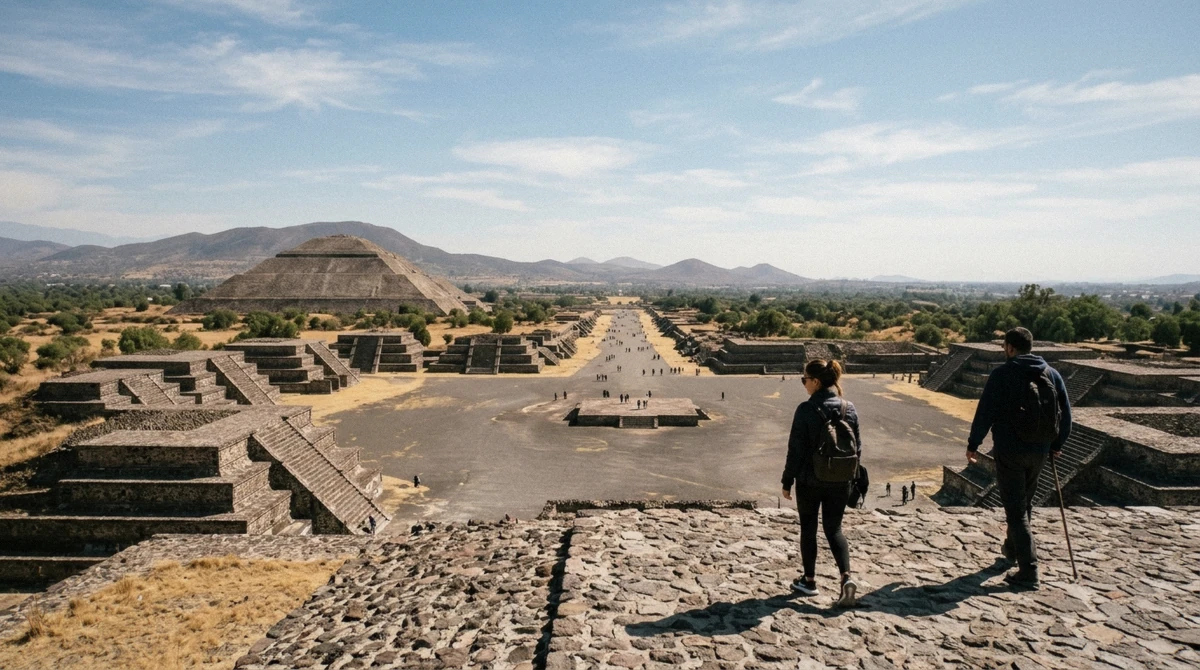
Teotihuacan is neither Aztec nor Mayan. A city of at least 100,000 people stood here more than a thousand years before the Aztecs reached the Valley of Mexico, and it was already a ruin when they gave it the name we still use. So is Teotihuacan Aztec or Mayan? Travellers ask because those two peoples fill most of what Mexico's tourism says about its past, and the pyramids look like both. This page sorts out the dates, the builders and the surprising facts, then shows how to see the site from Mexico City.
Quick answer
No. Teotihuacan is neither Aztec nor Mayan: the city was founded around 100 BCE, and the Aztecs only entered the Valley of Mexico around 1250 CE, about 700 years after its main monuments burned. The builders are still unknown. The Aztecs gave the ruins their Nahuatl name, "place where the gods were made".
Key takeaways
- Aztec chronology starts about 1,350 years after Teotihuacan was founded, so the Aztecs found the city dead
- The Maya tradition is older than the city, but Teotihuacan sat in the central highlands and was never a Maya city: what the evidence says
- Nobody knows what its builders called themselves or the city, and INAH says so plainly: the builders question
- To meet Aztec and pre-Aztec Mexico in one day, the full-day tour through Aztec Tlatelolco and Teotihuacan is the one that spans both
- Seeing the site yourself is simple: how to get there from Mexico City
Tours That Make the Aztec and Teotihuacan Story Clear
A guide turns the date gap into something you can see on the ground. These three suit this question best.
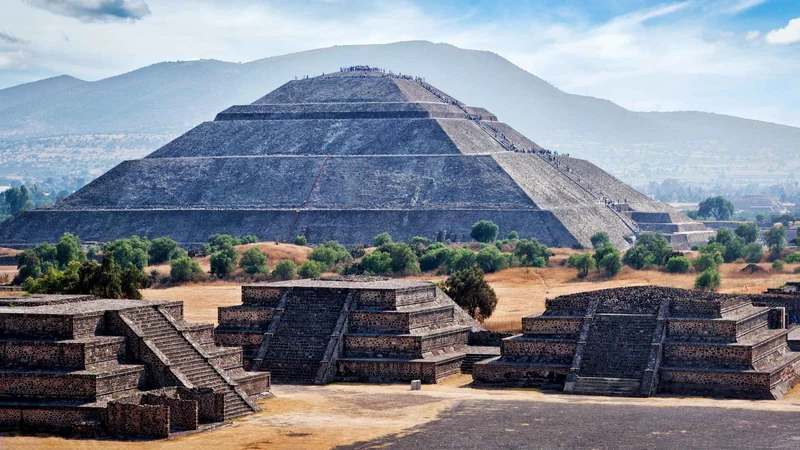
Tlatelolco, Basilica of Guadalupe & Teotihuacan Full-Day Tour
The broadest single-day history tour on this list: Aztec Tlatelolco (including the 1968 massacre site), the world's second-most-visited Catholic pilgrimage site at Guadalupe, and the Teotihuacan Pyramids. Guide quality is the standout metric at 4.9/5 across 266 reviews, and the 10:00 AM departure swaps the restaurant buffet for earth-oven barbacoa with pulque, tequila, and artisanal spirit tastings. The honest trade-off, noted in GetYourGuide's own review summary: some travelers ask for less time at shopping and lunch and more time at Teotihuacan — pick a dedicated pyramids tour if the site itself is your priority. Lunch is only included if selected with your departure time.
- Cancellation
- Free cancellation, full refund
- Operator
- None stated
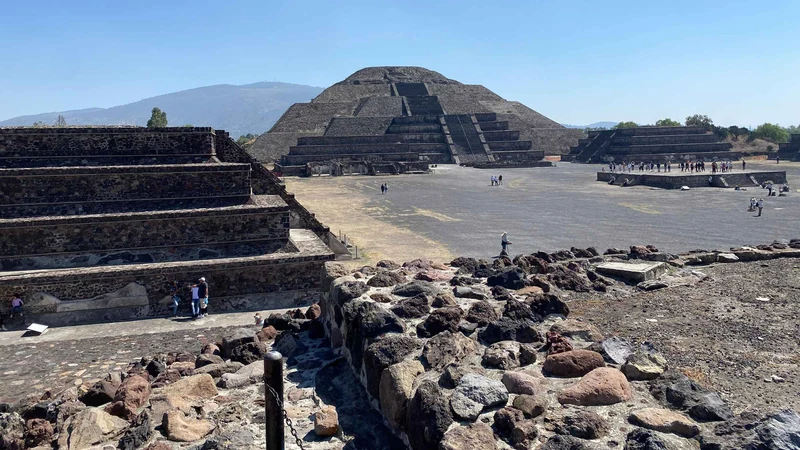
Private Teotihuacan Tour with Historian Hector (5 Hours, SUV Pickup)
This is the pyramids-only option for people who want depth without the 8–11 hour day: Hector, a historian versed in Nahuatl language and Teotihuacan cosmology, drives you in a private SUV, covers five structures including the often-skipped Pyramid of the Feathered Serpent and Palace of Quetzalpapalotl, and has you back at your hotel by about 12:10 PM. It scores a perfect 5.0 across all 10 reviews. Be aware it is not suitable for children under 15, pregnant women, or travelers with back, heart, or mobility problems — and no food or beverages are included. Hotels outside the standard pickup areas need to send a full address before booking.
- Cancellation
- Free cancellation, full refund
- Operator
- Hector (private historian guide)
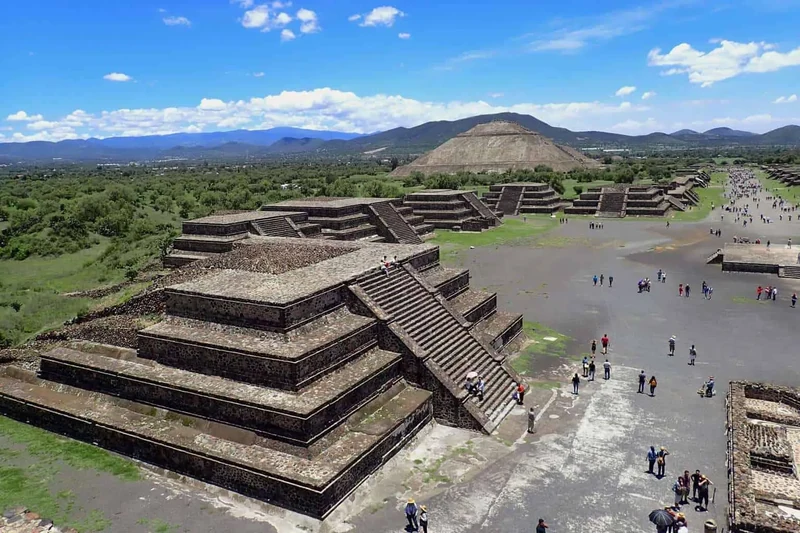
Teotihuacan No-Commercial-Stops Tour with Certified Guides
For history-first travelers: Experiencias Mexicanas strips out every commission-earning stop that standard group tours include, spending the time at the pyramids instead — about 3 hours on site plus a Pemex restroom stop en route. All guides are certified in archaeology and history, and the tour ran even for a single booked participant. One honest caveat from a review: water is not provided and sunscreen isn't flagged in advance — bring both, or you'll buy them at inflated prices at the site.
- Cancellation
- Free cancellation, full refund
- Operator
- Experiencias Mexicanas
So Is Teotihuacan Aztec, Mayan or Something Else?
The short answer: something else
Teotihuacan belongs to neither culture. It was the capital of an earlier, separate society in the highlands of central Mexico, founded around 100 BCE and at its height roughly between 350 and 550 CE. INAH, the Mexican institute that runs the site, describes it as the seat of one of the most influential societies in Mesoamerica and says the city concentrated more than 100,000 inhabitants at its peak.
The Aztec link is only the name. Teotihuacan is a Nahuatl word, the language of the Mexica, and INAH translates it as "place where the gods were made". The people who lived in the city used another name, and INAH states that what they called it is unknown.
The Maya link is geography and trade, not identity. Maya cities were mostly in the southern lowlands and the Yucatan, hundreds of kilometres from here. National Geographic's editors are explicit that Teotihuacan was not ruled by the Maya, while noting that people from Maya, Mixtec and Zapotec lands lived in the city.
Is Teotihuacan Older Than the Aztecs?
Yes, by more than a thousand years
Teotihuacan is far older than the Aztecs. The Mexica entered the Basin of Mexico around 1250 CE and founded their island capital Tenochtitlan in 1325. The Triple Alliance that became the Aztec Empire formed in 1428 and the empire fell on 13 August 1521. The city of Teotihuacan was founded around 100 BCE and its main monuments were burned around 550 CE.
That makes the gap about 1,350 years between the founding of Teotihuacan and the arrival of the Mexica, and about 700 years between the fire and their arrival. National Geographic puts it the same way: the Mexica arrived more than a thousand years after the city was built.
The same arithmetic answers the question people phrase as which is older, Teotihuacan or Tenochtitlan. Teotihuacan is older by about 1,400 years, measured from its founding to the founding of Tenochtitlan in 1325.
Dates side by side
The table lines up the three names people confuse. Figures come from the sources named below the table, and dates for early periods are scholarly estimates that vary by a few decades between authors.
| Culture | Where | Main period | Key dates |
|---|---|---|---|
| Teotihuacan | Valley of Teotihuacan, central Mexico | Founded about 100 BCE, peak about 350 to 550 CE | Main monuments burned about 550 CE |
| Maya (Classic period) | Yucatan, Guatemala, Belize, Chiapas | Classic period 200 to 900 CE, with Preclassic roots | Tikal falls to an outside warlord in January 378 |
| Aztec (Mexica) | Basin of Mexico, capital Tenochtitlan | Late Postclassic, 1200 to 1521 CE | Tenochtitlan 1325, Triple Alliance 1428, conquest 1521 |
Is Teotihuacan Older Than the Maya?
The Maya tradition is older, the Maya Classic period overlaps
It depends on what you mean by Maya. Maya society was already developing in the Middle and Late Preclassic, before about 200 CE, so the Maya as a people have deeper roots than a city founded around 100 BCE. The Classic Maya period, the age of the great stone cities, runs from 200 to 900 CE, and Teotihuacan's peak, about 350 to 550 CE, falls inside it.
So the two were contemporaries. Teotihuacan was not a Maya city and it was not built by the Maya, but the two worlds were in contact. In January 378 a warlord named Sihyaj K'ahk' took the Maya city of Tikal, an event recorded on Tikal's Stela 31 and long linked to Teotihuacan. Scholars still debate whether the Teotihuacan state itself sent him or a group of people who used Teotihuacan's Feathered Serpent symbols.
Is It True the Aztecs Found the Pyramids?
They found the ruins and renamed them
Yes, in the sense that matters. The Aztecs reached a city that had been abandoned for centuries, walked among monuments that were still huge and gave the place the name Teotihuacan. Arqueologia Mexicana notes that later peoples believed gods or giants had built the pyramids and that this was the place where the gods created the Fifth Sun.
They did not build it, and the Aztecs themselves did not claim to. That is why the answer to are the Aztecs and Teotihuacan the same is no. The Aztecs are a later people who treated Teotihuacan as sacred.
Who Built Teotihuacan If Not the Aztecs or the Maya?
Nobody knows for certain
The honest answer is that the builders are unknown. Early scholars credited the Toltec, but the Toltec flourished centuries after Teotihuacan's peak, so that idea no longer works. Candidates today include the Totonac culture, and the evidence suggests the city drew people from several regions, including Maya, Mixtec and Zapotec communities. One theory holds that refugees from a volcano's eruption either founded or strengthened the city.
National Geographic adds the detail that surprises most visitors: Teotihuacan has no military structures at all, even though its influence reached across the region. Archaeologist Sergio Gomez, who has worked at the site since 2003, has reached the end of a tunnel that could hold a ruler's tomb.
What the unknown language means for the name
Because the people who lived here left no known record of their own name for the city, the name on every ticket and sign is borrowed. Teotihuacan is a Nahuatl word given by the Aztecs. The original name is unknown, so each time you say the name you are using an Aztec word for a city that was not Aztec.
What Is So Special About Teotihuacan?
It was the biggest city in the Americas for centuries
Teotihuacan was the largest city anywhere in the Western Hemisphere before the 1400s, according to archaeologist George Cowgill quoted by National Geographic. It covered about 21 km2, held roughly 100,000 people and, in Arqueologia Mexicana's reckoning, was the sixth-largest city in the world in its time, behind Constantinople and Alexandria. UNESCO listed the site as a World Heritage Site in 1987.
The planning is the other reason to go. The city was laid out on one grid around the Avenue of the Dead, with an estimated 2,000 apartment compounds each housing 20 to 100 people, divided by social status. Those figures describe real urban planning 1,500 years ago, in a place with no known military structures.
Surprising facts that are actually true
The table collects the facts guides repeat most and checks each against a source, so you can tell a verified fact from a legend.
| Claim | Verdict | Basis |
|---|---|---|
| The Aztecs built the pyramids | False | The city was abandoned centuries before the Aztecs arrived |
| Its original name is lost | True | INAH: the name its inhabitants used is unknown |
| The city had no fortifications or military buildings | True | National Geographic |
| It was a World Heritage Site from 1987 | True | UNESCO via INAH |
| The Maya ruled it | False | National Geographic's editors say the city was not ruled by the Maya |
| You can still climb the Pyramid of the Sun | False | Closed to climbers, see the climbing rules |
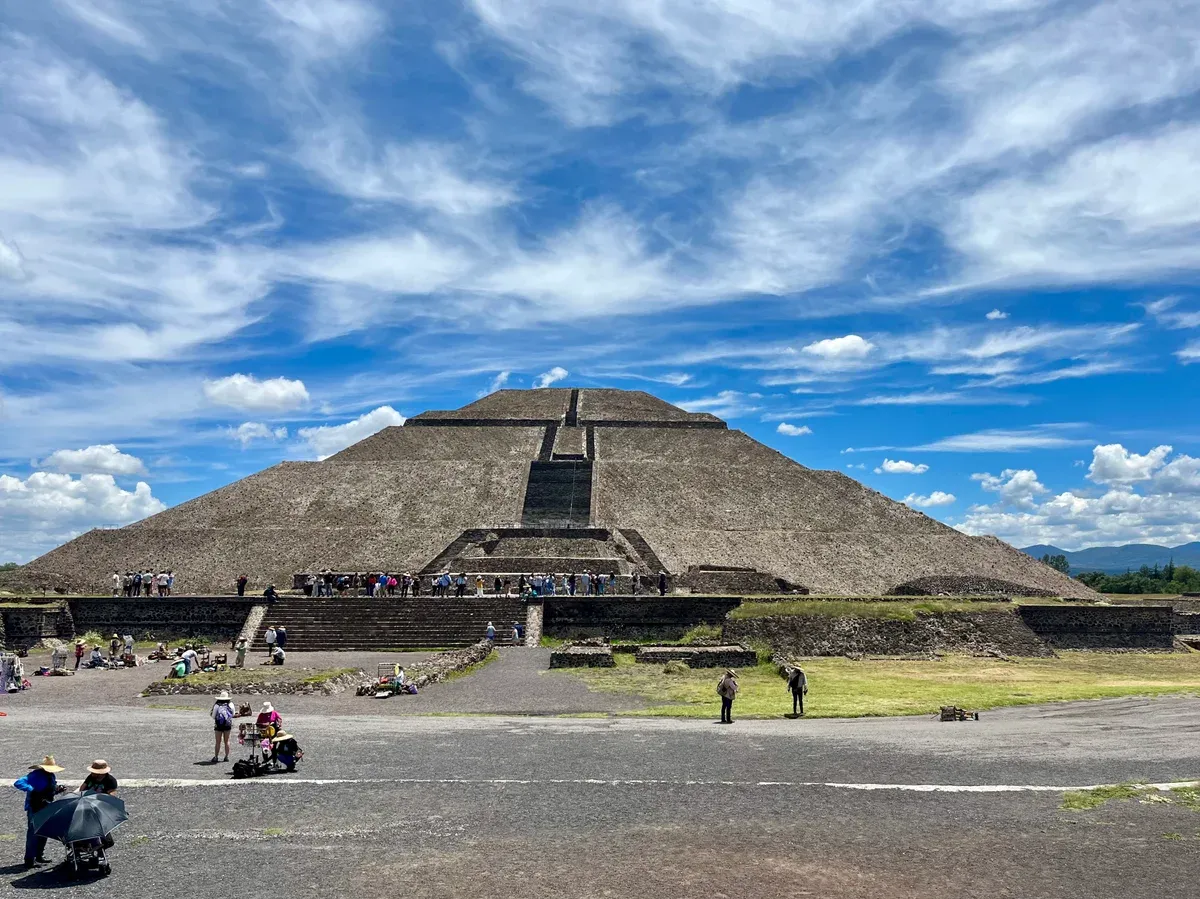
The Pyramid of the Sun. Photo: Malkowo, CC BY 4.0, via Wikimedia Commons
What Does the Aztec Connection Change for a Visitor?
You are visiting a ruin the Aztecs also visited
Knowing the date gap makes the walk easier to read. Teotihuacan was already an ancient ruin to the Aztecs, so the layout you see is almost exactly what they saw, minus the stucco and paint that once covered the stone.
If you want the Aztec side of the story too, the closest Aztec ruins are inside Mexico City, at Tlatelolco. The full-day tour that combines Tlatelolco and Teotihuacan is the only listed option that puts an Aztec site and Teotihuacan in one itinerary, with the Basilica of Guadalupe between them.
Do not expect to climb. The Pyramid of the Sun is closed to climbers and the Pyramid of the Moon opens only its first section, the rules explained in our climbing guide. The pyramids are still worth the trip, as our worth-it verdict explains.
Why Was Teotihuacan Abandoned?
Fire, conflict and a failing climate all appear in the evidence
Around 550 CE the main monuments along the Avenue of the Dead were burned. Recent evidence suggests the burning was concentrated on the buildings of the ruling class rather than the whole city, and some scholars link the decline to the extreme weather events of 535 to 536. Another theory holds that poorer residents rose against the elite. Nobody has settled it, and National Geographic's Cowgill points out that the more interesting question is why the city lasted so long.
By about 750 CE the city was effectively empty. People stayed in the valley, and Teotihuacan was never forgotten, which is why the Aztecs knew it as a sacred place.
How to See Teotihuacan From Mexico City
The practical picture in four lines
The site is fewer than 50 km north of Mexico City. General entry costs 210 MXN, about $11 at 19 pesos to the dollar, and Mexican nationals and residents pay 105 MXN. The site opens at 8:00 AM and the busy window runs from about 10 AM to noon. The full breakdown, with the equinox weekend crowds expected on 20 and 21 March 2027, sits on the cost page, and independent travellers will find the bus route in the no-tour guide.
The Teotihuacan pyramids tours compared here cover every way of arriving, from a sunrise balloon to a historian-led private morning. If you want a guide who can walk you through the Aztec versus Teotihuacan question on the ground, choose a tour led by a certified guide or a historian.
Which tour fits which traveller
Prices and durations below are the operators' own listed figures and are shown per person, except the private tour, which prices the vehicle for the group.
| Option | Best for | Duration | From |
|---|---|---|---|
| Early-access small group | On site at 8 to 9 AM, before the coaches | 8 hours | $68 |
| Morning bus tour | A big-coach morning from five central pickup points | 5.5 hours | $39.20 |
| Half-day, first at the pyramids | Back in the city by 1:30 PM | 5 to 6 hours | $38 |
| Sunrise balloon flight | Seeing the whole grid of the city from the air | 3 to 11 hours | $166 |
| Private historian tour | Questions like this one answered in depth | 5 hours | $135 |
| Tlatelolco, Guadalupe and Teotihuacan | Aztec and pre-Aztec Mexico in one day | 9 hours | $71 |
Questions About Teotihuacan and the Aztecs and Maya
Who built Teotihuacan?
The builders are unknown. Early scholars credited the Toltec, but the Toltec came centuries later, and current evidence points to a multi-ethnic city. National Geographic notes the Totonac culture as one candidate. A historian-led visit such as the private historian tour goes through the evidence.
What does Teotihuacan mean?
INAH translates the Nahuatl name as "place where the gods were made". The Aztecs gave it, centuries after the city was abandoned. The original name is unknown.
How old is Teotihuacan?
The city was founded around 100 BCE and peaked about 350 to 550 CE, so its oldest buildings are about 2,100 years old. The main monuments burned around 550 CE.
Did the Aztecs live at Teotihuacan?
No. The Aztecs lived on an island capital, Tenochtitlan, founded in 1325 under what is now central Mexico City. They visited Teotihuacan as a sacred ruin.
How far is Teotihuacan from Mexico City?
Fewer than 50 km. The morning bus tour is a 5.5-hour round trip from central Mexico City.
Is Teotihuacan older than Chichen Itza?
Yes. Teotihuacan was at its peak while the Classic Maya were building, centuries before Chichen Itza's pyramid reached its final form. The full comparison is in which is older, Chichen Itza or Teotihuacan.