 Teotihuacan Pyramids Tours
Which Is Older, Chichen Itzá or Teotihuacan?
Teotihuacan is older, by roughly six to eight centuries. Its Pyramid of the Sun dates to about 200 CE, while El Castillo at Chichen Itza took its final form between about 900 and 1000 CE, and the Maya city around it only began to rise near 600 CE. So which is older, Chichen Itzá or Teotihuacan? This page puts both timelines side by side, explains why the Maya site feels more ancient than it is, compares the two pyramids and ends with how to see Teotihuacan from Mexico City in a day.
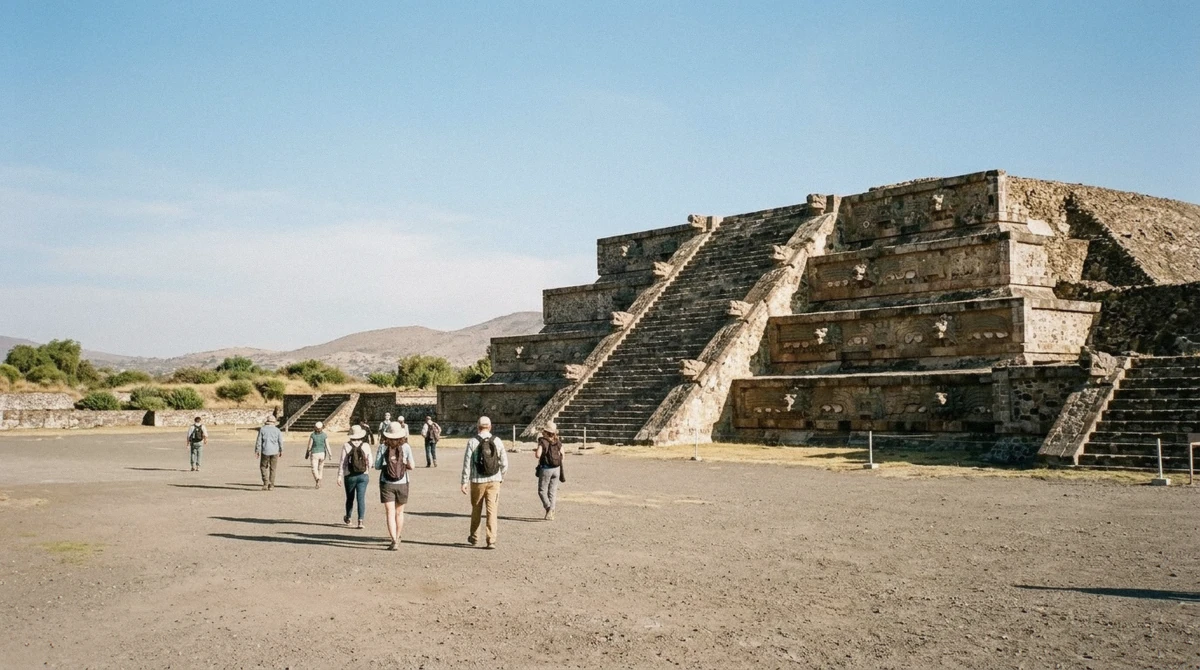
Quick answer
Teotihuacan is older. Its Pyramid of the Sun dates to about 200 CE and its ceremonial centre burned around 550 CE, while Chichen Itza only rose to power around 600 CE and El Castillo belongs to the 8th to 12th centuries, a gap of 600 to 800 years between the two pyramids.
Key takeaways
- The Pyramid of the Sun was standing about 700 to 800 years before El Castillo reached its final form, around 900 to 1000 CE
- Teotihuacan was already a ruin when Chichen Itza became a major city, so the two barely overlap in time
- Chichen Itza feels older because it is Maya, intact and famous, not because it is early: why the order gets mixed up
- The Pyramid of the Sun is the bigger structure, about 63 to 65 m against El Castillo's 24 m, compared below
- Only Teotihuacan is a day trip from the capital, fewer than 50 km away: see the tours from Mexico City
See the Older Pyramid on a Day Trip From Mexico City
Teotihuacan is the older of the two and the only one within reach of Mexico City in a morning. These tours suit someone who wants the timeline explained on site.
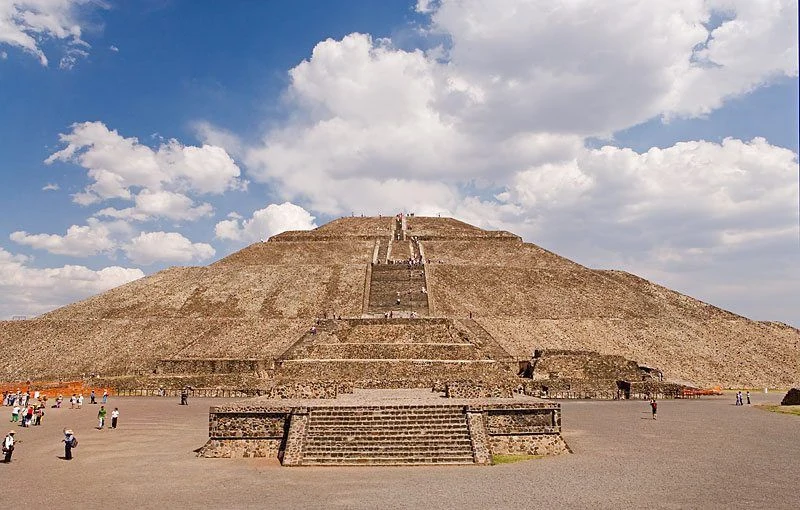
Teotihuacan Half-Day Tour — First at the Pyramids
The efficiency pick: first morning visitors at the site, a focused 2h40m guided circuit that deliberately starts at the Temple of Quetzalcoatl before crowds arrive, and a 1:00–1:30 PM return that leaves your afternoon free. Coffee stop en route is the only food opportunity before the pyramids — there are no food stops at the site, so bring water and sunscreen. One caveat from reviews: the Starbucks Reforma pickup intersection has three Starbucks locations — use the exact address (Av. Reforma 80) from your confirmation.
- Cancellation
- Free cancellation, full refund
- Operator
- None stated
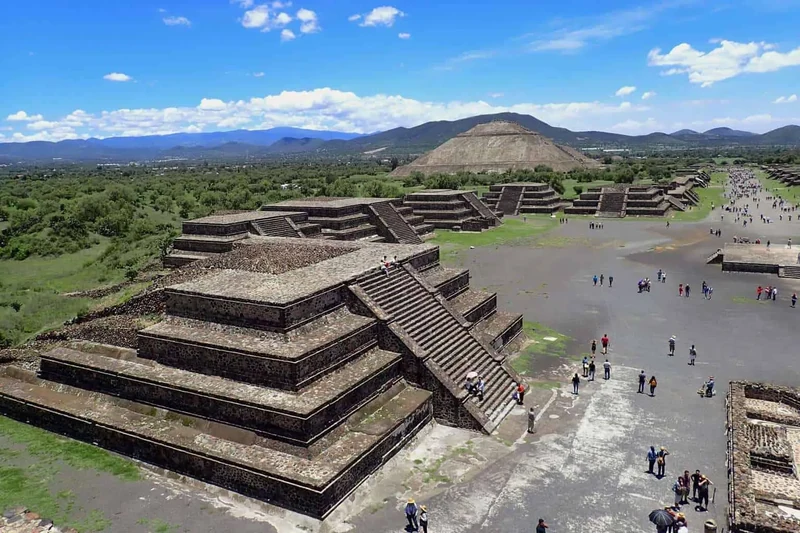
Teotihuacan No-Commercial-Stops Tour with Certified Guides
For history-first travelers: Experiencias Mexicanas strips out every commission-earning stop that standard group tours include, spending the time at the pyramids instead — about 3 hours on site plus a Pemex restroom stop en route. All guides are certified in archaeology and history, and the tour ran even for a single booked participant. One honest caveat from a review: water is not provided and sunscreen isn't flagged in advance — bring both, or you'll buy them at inflated prices at the site.
- Cancellation
- Free cancellation, full refund
- Operator
- Experiencias Mexicanas
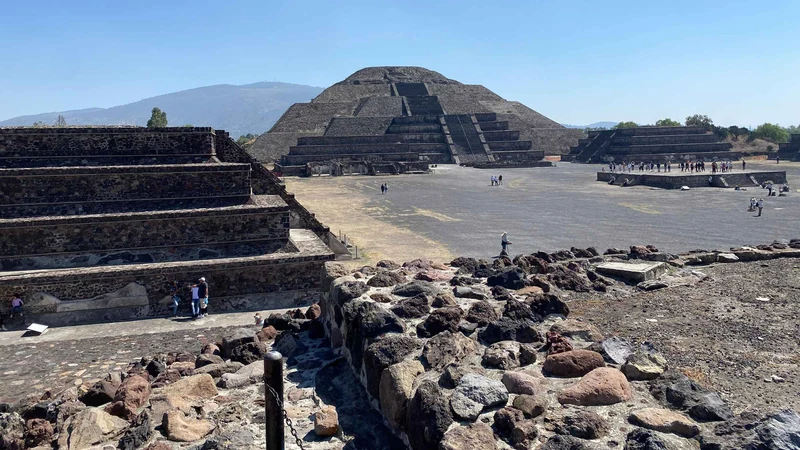
Private Teotihuacan Tour with Historian Hector (5 Hours, SUV Pickup)
This is the pyramids-only option for people who want depth without the 8–11 hour day: Hector, a historian versed in Nahuatl language and Teotihuacan cosmology, drives you in a private SUV, covers five structures including the often-skipped Pyramid of the Feathered Serpent and Palace of Quetzalpapalotl, and has you back at your hotel by about 12:10 PM. It scores a perfect 5.0 across all 10 reviews. Be aware it is not suitable for children under 15, pregnant women, or travelers with back, heart, or mobility problems — and no food or beverages are included. Hotels outside the standard pickup areas need to send a full address before booking.
- Cancellation
- Free cancellation, full refund
- Operator
- Hector (private historian guide)
Which Is Older, Chichen Itzá or Teotihuacan?
The two timelines side by side
Teotihuacan comes first on every measure. People lived in the valley in the last centuries BCE, and the planned city with its grid and the Pyramid of the Sun belongs to the first two centuries CE. Chichen Itza started as a smaller Maya settlement around the 6th century CE, rose to prominence from about 600 CE, and built El Castillo in the centuries that followed.
The table sets the milestones next to each other. Every date is an approximate scholarly range, and the sources disagree by a few decades, but no reading of them puts Chichen Itza's pyramid before Teotihuacan's.
| Milestone | Teotihuacan | Chichen Itza |
|---|---|---|
| City begins | Last centuries BCE, with the planned grid in place by CE 1 to 150 | About the 6th century CE |
| Main pyramid | Pyramid of the Sun, about 200 CE | El Castillo, 8th to 12th century CE, last major work about 900 to 1000 CE |
| Peak | About 350 to 550 CE, with roughly 100,000 people | About 800 to 1000 CE |
| End as a capital | Centre burned around 550 CE, city largely empty by about 750 | Fell by around 1000 CE |
How the dates were worked out
Neither date comes from an inscription on the pyramid itself. Archaeologists build the Teotihuacan sequence from pottery phases found in excavations, which is why the city's chronology is written in named phases such as Tzacualli (CE 1 to 150) and Tlaminilolpa (CE 250 to 450) rather than in single years. At Chichen Itza the earliest hieroglyphic date is from the 9th century, and later work argues that a major re-founding happened around 929 to 932 CE.
That is the main reason the Chichen Itza figures in the table are ranges: scholars place the same buildings in slightly different centuries.
How Many Years Apart Are the Two Pyramids?
Measured from the Pyramid of the Sun
Counting from the Pyramid of the Sun at about 200 CE, El Castillo is between 600 and 1,000 years younger, depending on which century you give its construction. The core of the pyramid is usually placed in the 8th to 12th centuries, with the last major work around 900 to 1000 CE, which gives a gap of 700 to 800 years for the finished building.
For scale, the Pyramid of the Sun is closer in time to Chichen Itza than it is to Giza. The Great Pyramid of Giza was built around 2600 BCE, about 2,800 years before the Sun pyramid, as the Mexican and Egyptian pyramid comparison lays out.
| Chichen Itza event | Date | Years after the Pyramid of the Sun |
|---|---|---|
| City begins to rise | About 600 CE | About 400 years |
| El Castillo construction period begins | 8th century CE | About 600 years |
| Last major work on El Castillo | About 900 to 1000 CE | About 700 to 800 years |
| End of the construction period | 12th century CE | About 1,000 years |
Teotihuacan versus the Aztecs
The same logic puts Teotihuacan far ahead of the Aztecs. The city had been empty for more than seven centuries when the Aztecs founded their capital Tenochtitlan in 1325, and they gave the ruins the name Teotihuacan, a Nahuatl word usually translated as the place where the gods were created. The Aztec or Mayan guide covers who really built it.
Why Does Chichen Itza Feel Older Than Teotihuacan?
Fame, mystery and a Maya label
Chichen Itza is the better-known name outside Mexico, and fame is easily mistaken for age. The site carries the Maya label that most visitors associate with ancient Mexico, it was named one of the New Seven Wonders in 2007, and El Castillo is an almost complete, symmetrical pyramid that looks exactly like the picture in the textbook.
Teotihuacan has the opposite problem. Nobody knows what its people called themselves or what language they spoke, so the city is known by the name the Aztecs gave it centuries after it fell. A site with no name and no known authors is harder to place in time, and visitors often file it under the Aztecs, who are in fact the youngest civilisation of the three. The four Mesoamerican civilisations page sorts them in order.
The Maya were older, Chichen Itza was not
There is one honest sense in which the Maya came first. Maya villages and cities existed in the lowlands long before Teotihuacan was planned, so the Maya civilisation as a whole predates it. Chichen Itza, though, is a late chapter of that story.
It belongs to the Terminal Classic and Early Postclassic, after the great Classic Maya cities of the south had begun to decline. Asking which site is older gives a clear answer. Asking which people are older does not, because one is a single city and the other is a civilisation that lasted thousands of years.
Did Teotihuacan and Chichen Itza Overlap?
A short overlap at most
Almost not at all. Teotihuacan's ceremonial centre burned around 550 CE, and Chichen Itza only began to rise near 600 CE, so the Maya city's period of power starts after the older city's collapse. At best the two coexisted for a few decades in the 6th century, when Chichen Itza was a modest settlement and Teotihuacan was in decline.
Both cities worshipped a feathered serpent. At Teotihuacan the Temple of the Feathered Serpent inside the Ciudadela carries serpent heads on its facade. At Chichen Itza the serpent is the Maya god Kukulkan, and El Castillo shows it at the equinoxes as a shadow that appears to slide down the north stairway. The shared symbol shows how long the idea lasted in central Mexico. It does not mean the two cities were contemporaries.
| Feature | Teotihuacan | Chichen Itza |
|---|---|---|
| Feathered serpent | Temple of the Feathered Serpent, Ciudadela | Kukulkan, shadow serpent on El Castillo at the equinoxes |
| Builders | Unknown, language unknown | Maya |
| Name | Given by the Aztecs centuries later | Maya name, usually translated as at the mouth of the well of the Itza |
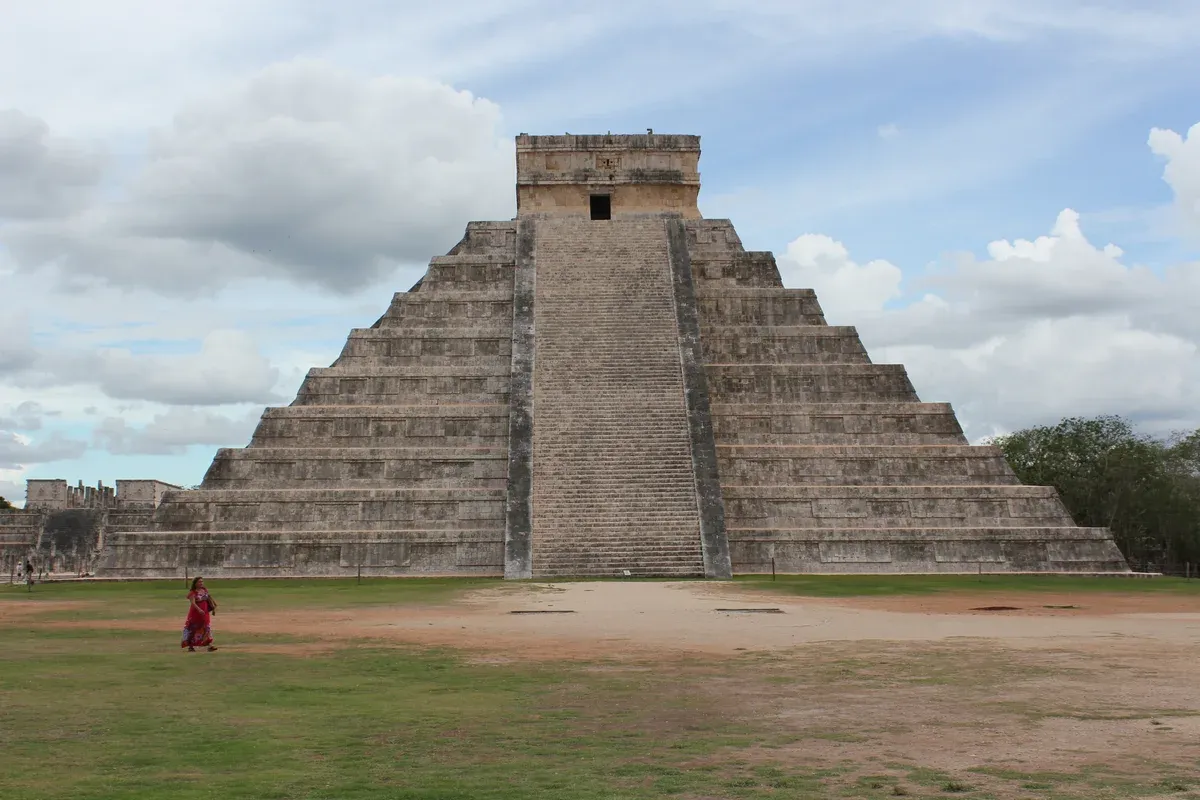
El Castillo at Chichen Itza, west side. Photo: Arian Zwegers from Brussels, Belgium, CC BY 2.0, via Wikimedia Commons
Which Is Bigger, Chichen Itza or Teotihuacan?
The older pyramid is also the larger one
Teotihuacan wins on size as well as age. The Pyramid of the Sun is about 63 to 65 m tall and ranks as the third-largest pyramid in the New World, with a volume of about 1.18 million m3. El Castillo is 24 m high, or 30 m counting the temple on top, and is a much more compact building.
The two sites are also different kinds of visit. Teotihuacan is a whole city to walk, with a 2.4 km Avenue of the Dead and three major pyramids. Chichen Itza is a cluster of monuments around one famous pyramid.
| Detail | Teotihuacan | Chichen Itza |
|---|---|---|
| Main pyramid | Pyramid of the Sun | El Castillo |
| Height | About 63 to 65 m | 24 m, 30 m with the temple |
| Climbing | Sun pyramid closed since 2020, first section of the Moon pyramid open | El Castillo closed since 2006 |
| From Mexico City | Fewer than 50 km, day trip | In the Yucatan, a flight away |
| Entry for foreign visitors | 210 MXN, about $11 at 19 pesos to the dollar | Paid at the gate to INAH and the state, see the site's own pages |
What Happened to Each City After Its Peak?
Two different endings
Teotihuacan did not fade slowly. Around 550 CE its ceremonial centre burned, the population drained away over the next two centuries, and the city never recovered its size. The ruins stayed in the valley, and the people who came later treated them as sacred. By the time of the Aztecs the place already had its Nahuatl name, and Aztec accounts held that rulers lay buried beneath the pyramids, a tradition that Doris Heyden argued in 1975 may have rested on fact.
Chichen Itza's decline came later and from a different direction. The city had risen to regional power after about 600 CE, held it through the Terminal Classic and into the Early Postclassic, and had fallen by around 1000 CE. Both ended as great centres long before the Spanish arrived, which is another reason the Spanish-era image of 'Aztec pyramids' is wrong for both of them. The Aztec empire itself only existed from 1428 to 1521.
Which Is Better to Visit, Chichen Itza or Teotihuacan?
Pick by where you are staying
Older does not mean better, and the two sites rarely compete for the same trip. If you are in Mexico City, Teotihuacan is the only realistic choice. If you are on the Yucatan coast, Chichen Itza is the one. A traveller crossing the country can see both, but each one is a full day.
For a longer comparison of what each site feels like, see is Teotihuacan worth visiting.
Which Site Fits Your Trip?
If You are based in Mexico City
Go to Teotihuacan. The half-day tour leaves around 7:55 AM and is back by about 1:30 PM
If You want the timeline explained by someone who knows it
Choose the private historian tour and ask the guide to walk the phases
If You want fewer shopping stops
Pick the no-commercial-stops tour, a six-hour round trip with a direct return
How to See the Older Pyramid From Mexico City
Hours, entry and the early start
The Teotihuacan archaeological zone is open daily from 8:00 AM to 5:00 PM with last access at 4:30 PM. General entry costs 210 MXN, about $11 at 19 pesos to the dollar, and Mexican nationals and residents pay 105 MXN. The coaches arrive between about 10 AM and noon, so an early start gives the quietest avenue. Bags are inspected at the entrances, as the safety guide explains, so leave large items behind.
The cost guide works through the rest of the day's spending, and the no-tour guide covers the public bus.
Choosing a tour
Prices are the operators' listed figures per person, except the private tour, which prices the vehicle for the group. Entry is included on each of these Teotihuacan pyramids tours from Mexico City.
| Option | Best for | Duration | From |
|---|---|---|---|
| Morning bus tour | The most-reviewed option, 4.9 from 7,632 reviews | 5.5 hours | $39.20 |
| Early-access small group | On site at 8 to 9 AM, before the coaches | 8 hours | $68 |
| Half-day, first at the pyramids | Back in the city by about 1:30 PM | 5 to 6 hours | $38 |
| No-commercial-stops tour | A direct return with no shopping | 6 hours | $36.88 |
| Private historian tour | Depth and your own pace | 5 hours | $135 |
Questions About Chichen Itzá and Teotihuacan
Is Teotihuacan older than the Maya?
No, not as a whole civilisation. Maya villages and cities existed in the lowlands before Teotihuacan was planned. Teotihuacan is older than Chichen Itza, which is a late Maya city. The four civilisations page puts them in order.
Is El Castillo older than the Pyramid of the Sun?
No. The Pyramid of the Sun dates to about 200 CE and El Castillo to the 8th to 12th centuries CE, so the Sun pyramid is 600 to 800 years older.
Who built Teotihuacan?
The builders are unknown, and the language they spoke is unknown. The Aztecs found the city long abandoned and named it. See is Teotihuacan Aztec or Mayan.
When was Teotihuacan abandoned?
Its ceremonial centre burned around 550 CE, and by about 750 CE the city was largely empty. Chichen Itza only rose to power around 600 CE.
Can you climb El Castillo or the Pyramid of the Sun?
Neither. El Castillo has been closed to climbers since 2006 and the Pyramid of the Sun since 2020. See what you can climb at Teotihuacan.
Can you visit Chichen Itza and Teotihuacan in one trip?
Yes, but they are a flight apart, so plan one full day for each. Teotihuacan is the easier one from Mexico City, as the morning bus tour shows at 5.5 hours round trip.